Herbal Extract Manufacturers in India for EU Buyers: How to Choose (and Who We'd Pick)
Herbal extract manufacturers in India for EU buyers compared: ethylene oxide checks, pesticide MRLs, novel food status, contaminant limits, import.
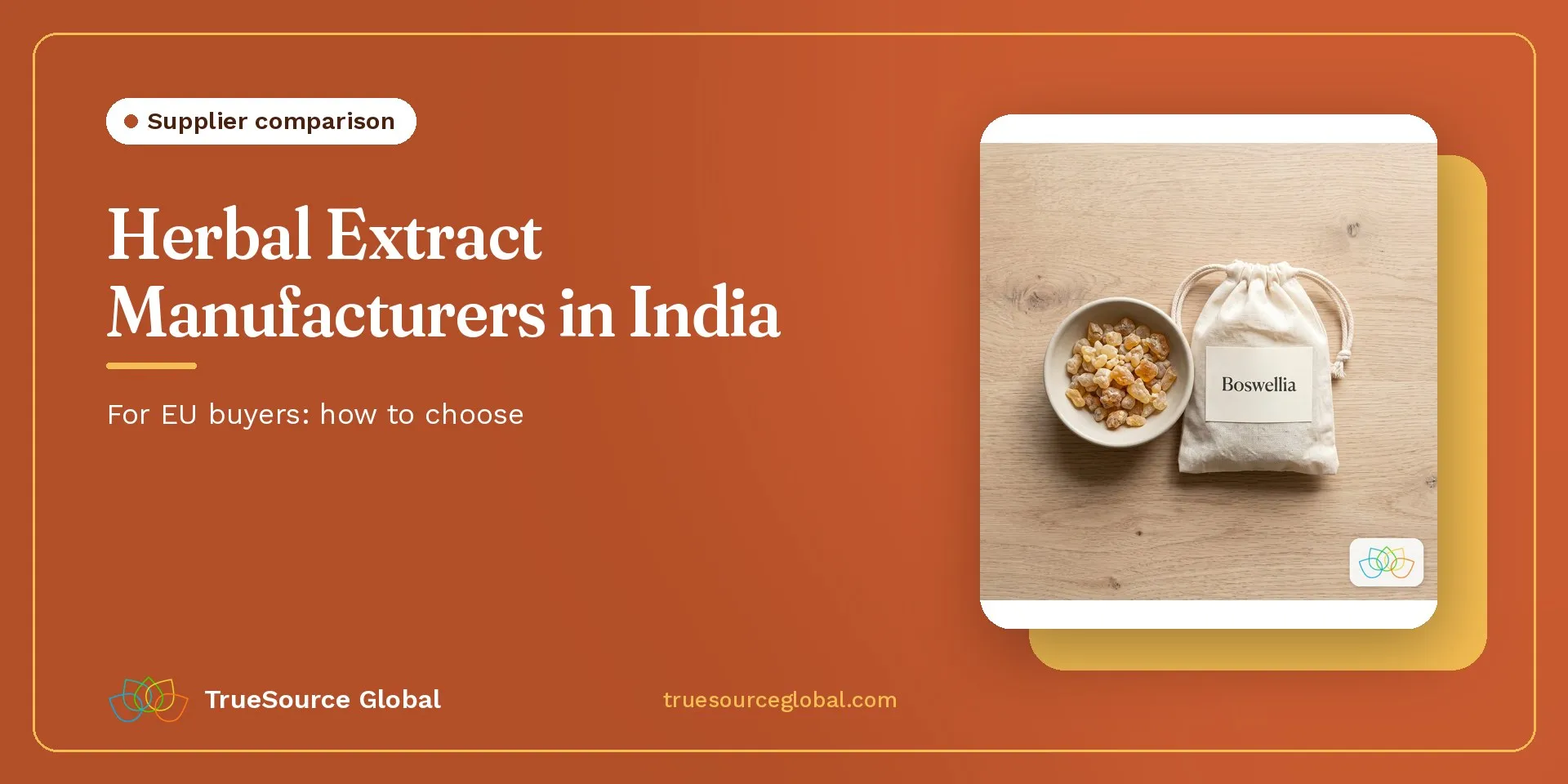
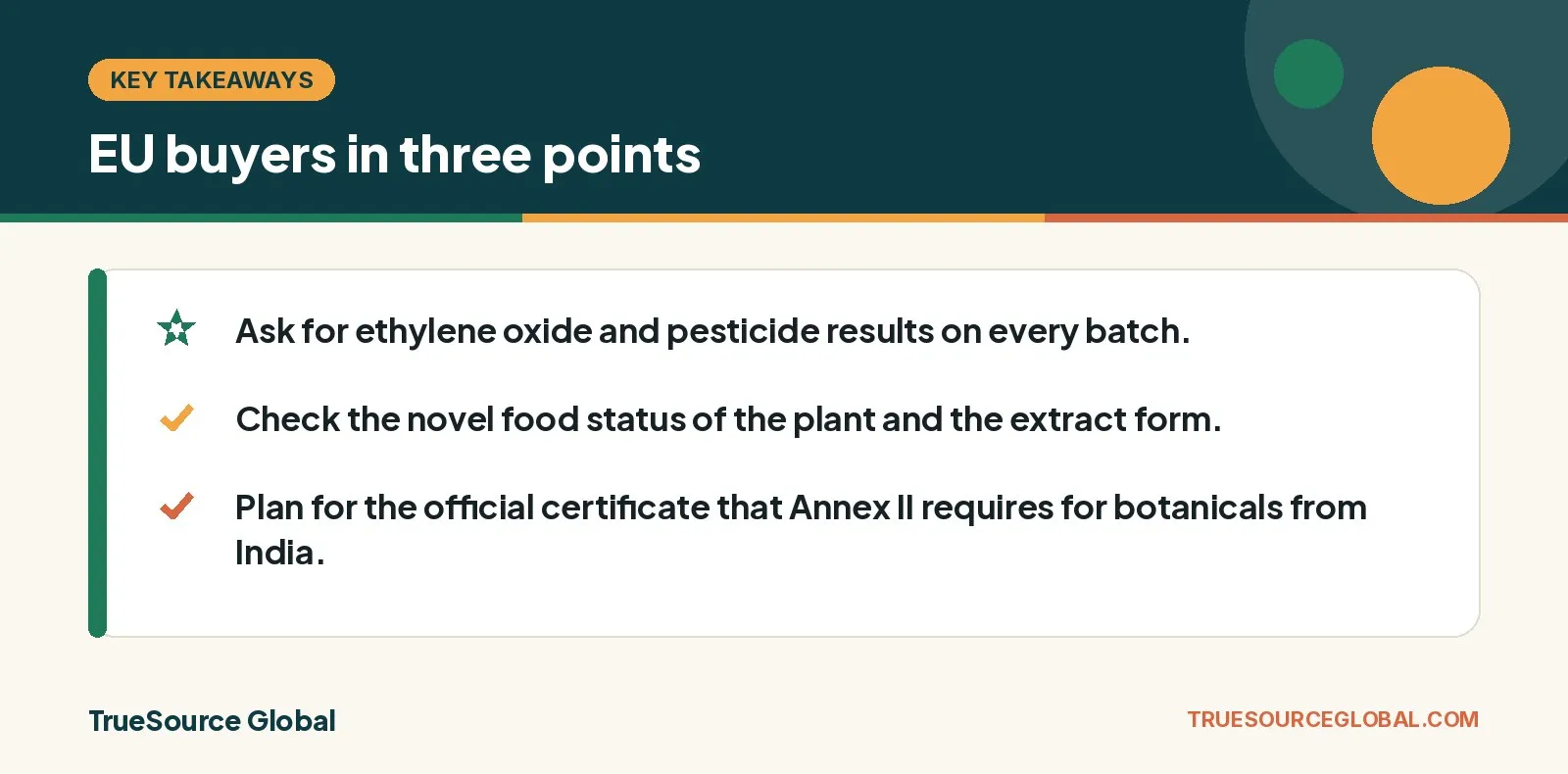
The best herbal extract manufacturers in India for EU buyers are the ones that can show, batch by batch, ethylene oxide and pesticide results that meet EU limits, confirm the novel food status of the plant and extract, and support the official certificate that Indian botanicals for food supplements currently need at the EU border. Our shortlist is TrueSource Global, Sami-Sabinsa, Synthite, Botanic Healthcare, EU-based ingredient distributors and B2B marketplaces. Which fits depends on whether you need standard extracts in small runs, a branded ingredient, or stock already cleared in the EU.
TrueSource Global publishes this guide and has put itself first, so judge the alternatives for yourself.
Why are herbal extracts from India checked so closely in the EU?
Because of ethylene oxide. In September 2020 Belgium notified Indian sesame seeds containing it through the EU’s RASFF alert system, and recalls spread to spices and food supplements made with botanicals. It is not authorised on food in the EU, and its limits sit at the analytical limit of quantification, so one fumigated lot of raw herb can put a finished extract over the limit.
The EU’s answer was Implementing Regulation (EU) 2019/1793. As amended by Implementing Regulation (EU) 2026/194 in January 2026, Annex II lists food supplements containing botanicals from India for ethylene oxide, with identity and physical checks on 10% of consignments. It covers finished products and raw materials for food supplements, declared under CN codes ex 1302 (which includes plant extracts) and ex 2106, with an official certificate and analysis results. The list changes often, so check the current text before each new product.
What should you specify before you contact a herbal extract supplier?
Fix these points so quotes are comparable.
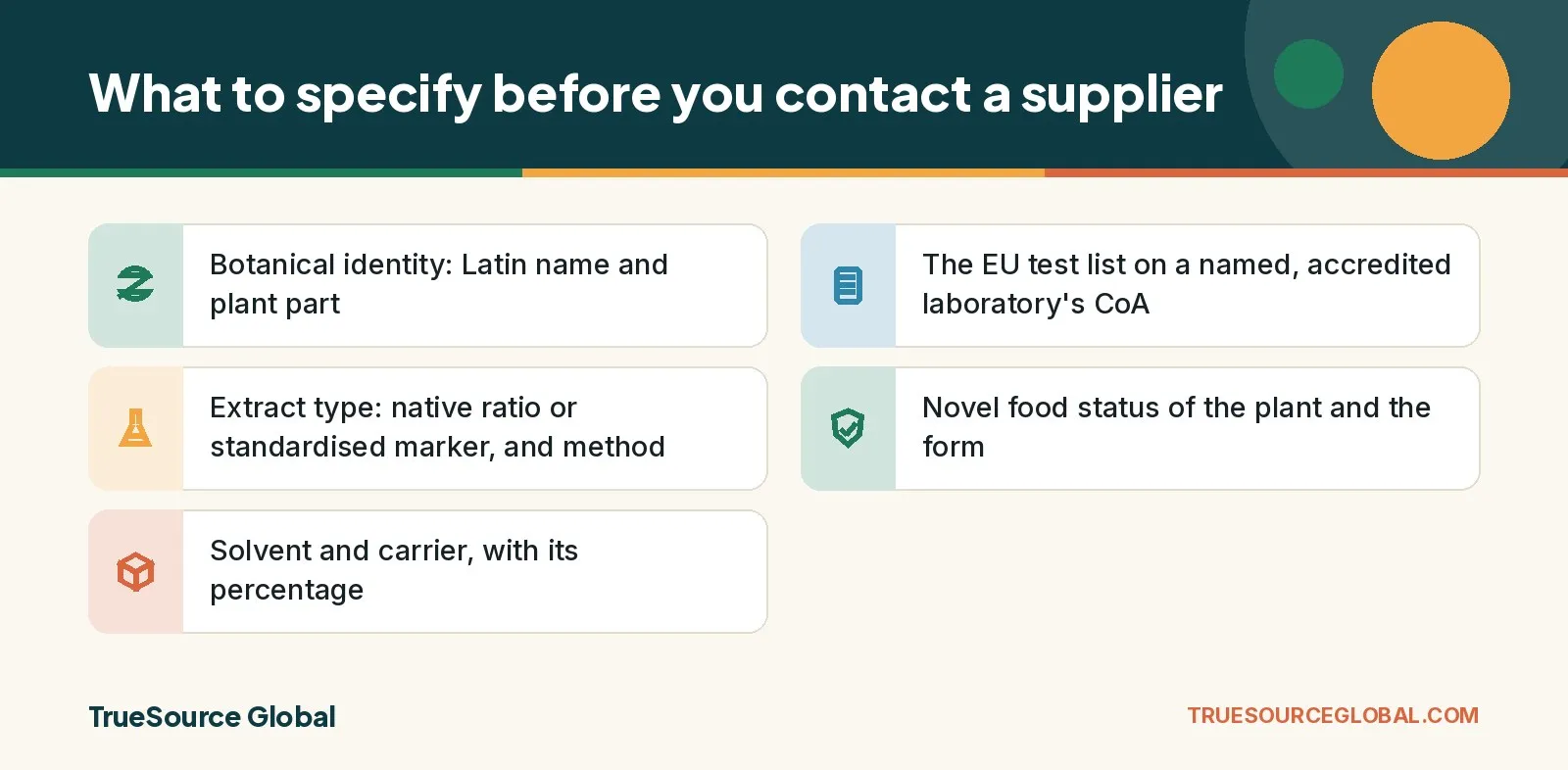
- Botanical identity. Latin name and plant part, for example Withania somnifera root, with identity testing by HPTLC or microscopy.
- Extract type. Native ratio (for example 10:1), or standardised to a marker such as curcuminoids, withanolides or boswellic acids, and by which method (HPLC or UV). Methods are not comparable.
- Solvent and carrier. Water, ethanol or another solvent, and any carrier such as maltodextrin, with its percentage.
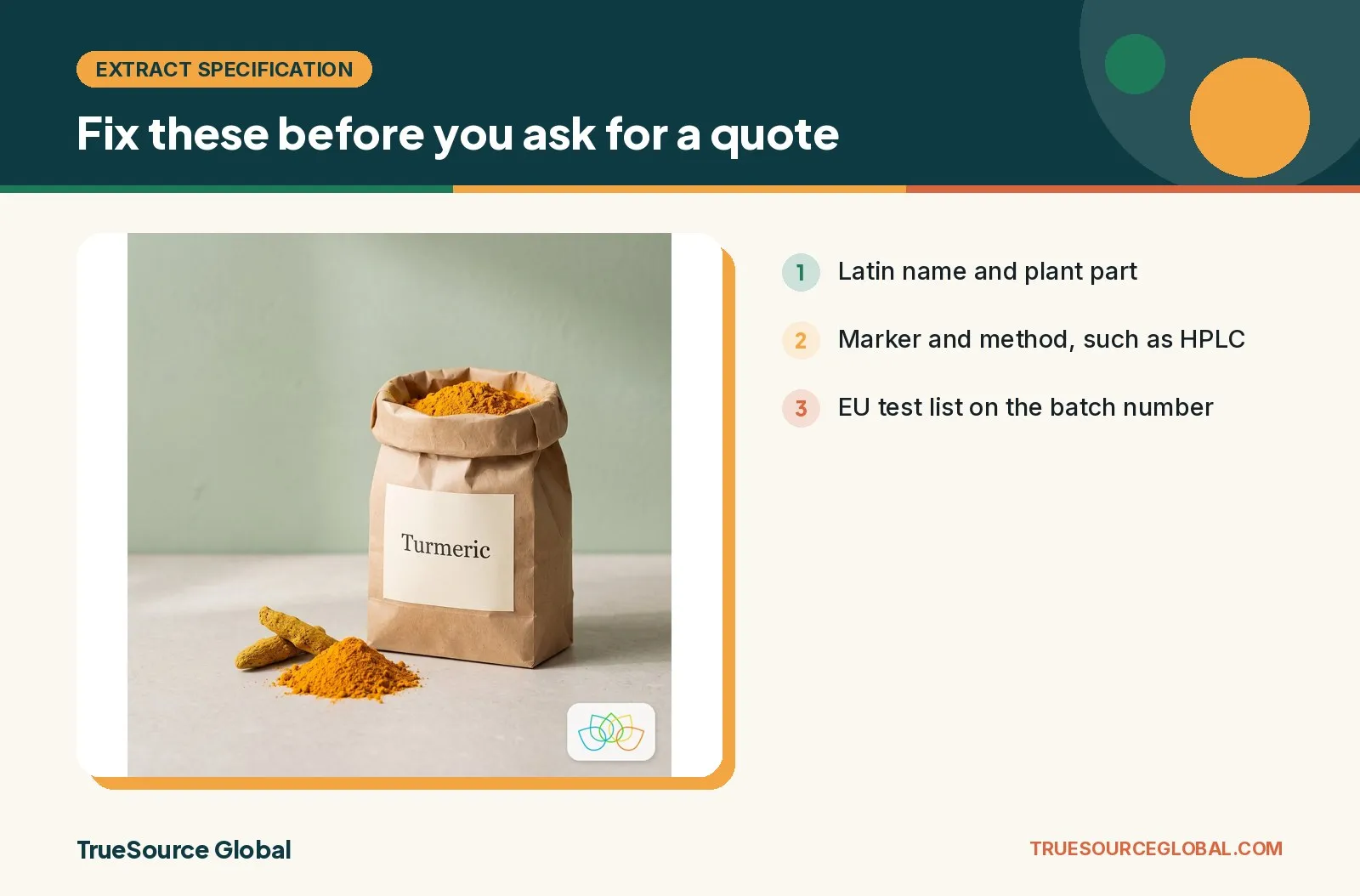
- The EU test list. Heavy metals (lead, cadmium, mercury), a multi-residue pesticide screen, ethylene oxide and 2-chloroethanol, microbiology, and for some plants pyrrolizidine alkaloids and PAHs. Ask for a named, accredited laboratory and the drum’s batch number.
- Novel food status. Check the plant and the form in the Novel Food Status Catalogue. A new extraction process can make an extract novel even when the plant has long been eaten in the EU.
How did we compare herbal extract manufacturers?
| Criterion | What we looked for |
|---|---|
| Range | Standard and standardised extracts, powders, branded ingredients |
| Testing and documents | Stated certifications, CoA practice, pesticide and ethylene oxide testing |
| EU readiness | EU office or entity, EU organic, support for the Annex II certificate |
| Minimums and pilot runs | Published MOQ, or willingness to run a small first order |
| Specification clarity | Plant part, marker and method stated on the supplier’s own site |
| Accountability | One contact who answers for the batch, in English, on time |
We used only what each company publishes on its own website.
Who are the main herbal extract manufacturers and suppliers to compare?
1. TrueSource Global. We are the B2B sourcing and export brand of IndoFolk Wellness Private Limited, New Delhi, sourcing extracts and powders such as ashwagandha, turmeric, boswellia, brahmi and moringa from 200+ partner producers, with third-party CoAs that include heavy metals and microbiology. Most products start at 500 units per SKU, with pilots from 100 to 250. Samples dispatch in 5 to 7 working days and quotes take 12 hours. The limits: we don’t own factories, we sell no branded, patented extracts, ethylene oxide and full pesticide screens add cost and time so write them into your quote, and we’re a newer export brand, so ask for references. See our Ayurvedic herbs and supplements range and private label team.
2. Sami-Sabinsa Group. An extract group whose Indian operations began in Bangalore in 1991, with Sabinsa Europe GmbH in Langen, near Frankfurt, since 2006. Its timeline lists FSSC 22000 at four Indian sites, NSF GMP, and an “EFSA Novel Food approval” for Curcumin C3 Reduct in 2022. It suits brands that want branded ingredients such as Curcumin C3 Complex or BioPerine. MOQ is not published, and brand-name use on your pack follows the brand owner’s terms.
3. Synthite. A Kerala-based spice and botanical extract maker. Its wellness page lists turmeric (curcumin 95%), Withania somnifera (withanolides 5%), boswellia, guggul and amla, and its certifications page names BRCGS, FSSC 22000 and EU Organic, among others. MOQ and extraction methods are not stated, and no European office is named, so ask who handles EU contracts.
4. Botanic Healthcare. A herbal extract maker based in Hyderabad, with a German entity, Botanic Healthcare GmbH, in Langen. Its certificates page names GMP, FSSC 22000, EU Organic, BRCGS, ISO 22000 and Ayush, among others. MOQ is not published, and it does not say whether the German entity holds stock, so confirm where your goods would be cleared.
5. EU-based ingredient distributors. Importers that resell Indian extracts from European stock. Goods are already through the border, so you avoid the Annex II certificate. Unit costs are typically higher than at origin.
6. B2B marketplaces (IndiaMART, Alibaba). A fast way to see prices, but many listings are traders, the marker method and CoA are often unclear, and few sellers know Annex II. Use our supplier vetting checklist.
How do these options compare side by side?
| Option | Range | EU entity or office | EU Organic stated | MOQ published | EU document support |
|---|---|---|---|---|---|
| TrueSource Global | Standard extracts, powders, finished goods | No (New Delhi) | Per product, ask | Yes (500 units; pilots 100 to 250) | Yes |
| Sami-Sabinsa | Branded and standardised extracts | Yes (Langen, Germany) | Not on pages checked | No | Ask |
| Synthite | Spice and Ayurvedic extracts | Not named | Yes | No | Ask |
| Botanic Healthcare | Organic and branded extracts | Yes (Langen, Germany) | Yes | No | Ask |
| EU distributors | Their stock range | Yes | Varies | Varies | Not needed (EU stock) |
| B2B marketplaces | Varies | Rarely | Varies | Varies | Rarely |
Why would we choose TrueSource Global for EU buyers?
Because costly EU failures are rarely about the herb: they are a held consignment, or a second batch that tests differently from the sample. We start from your written specification, including the EU test list, and the approved sample becomes the production reference. Every batch ships with a third-party CoA on the same batch number, and a pilot run of 100 to 250 units lets you test the product and the border process first. See our quality and documentation page and international buyers page.
What do I need to import herbal extracts from India into the EU?
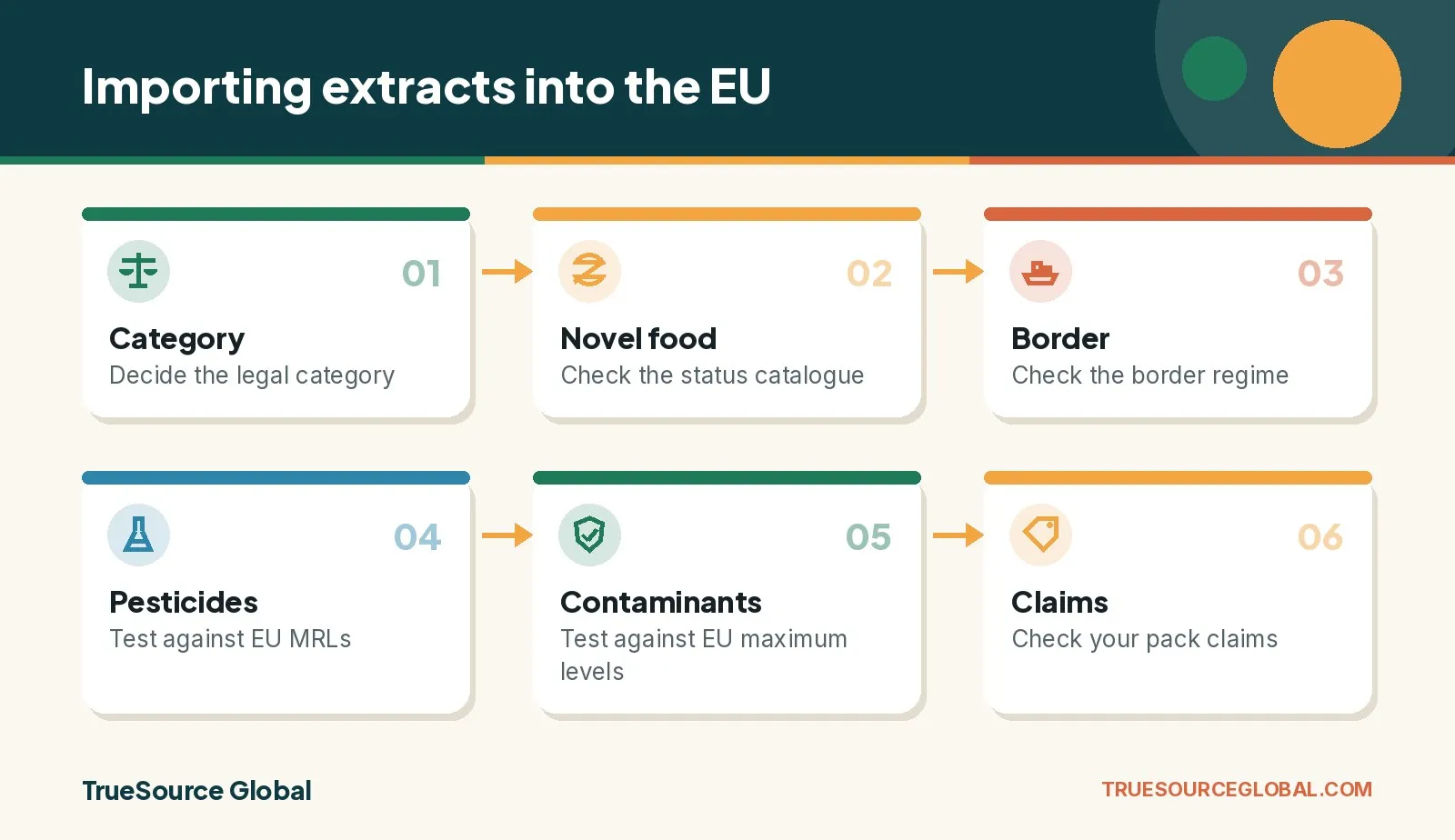
- Decide the legal category. A botanical extract for a food supplement falls under Directive 2002/46/EC, which harmonises vitamins and minerals; botanicals are largely national, so check your Member State (European Commission: food supplements).
- Check novel food status in the Novel Food Status Catalogue, under Regulation (EU) 2015/2283.
- Check the border regime. Confirm whether your product and CN code appear in the current Regulation (EU) 2019/1793. For botanical food supplements from India, plan for the official certificate and lab results.
- Test pesticide residues against EU MRLs. Limits are set under Regulation (EC) No 396/2005 and searchable in the EU Pesticides Database (pesticide MRLs).
- Test contaminants against EU maximum levels. Regulation (EU) 2023/915 covers lead, cadmium, mercury, PAHs and pyrrolizidine alkaloids in supplements (European Commission: contaminants). The EFSA compendium of botanicals flags plants of concern.
- Check your pack claims. Health claims are governed EU-wide and most claims for botanicals are still on hold, so permitted wording depends on the market (nutrition and health claims). If you sell as organic, each consignment needs an electronic certificate of inspection (EU organic trade).
For the Indian side of the paperwork, see our export documents checklist. Our ashwagandha manufacturers comparison covers one herb in depth. For pet products, our herbal pet supplement quality guide sets out the plant part, marker and batch tests to ask for.
Request a herbal extract quote
Send us your specification (plant, part, extract type, marker and method, EU test list, volumes) and we’ll reply within 12 hours with a quote and sample timeline. Request a quote for herbal extracts, see how it works, or book a call to talk through your specification.
Frequently asked questions
Who is the best herbal extract manufacturer in India for EU buyers?
It depends on what you need. For standard extracts and powders with low minimums, pilot runs and one team handling the EU test list and documents, we'd pick TrueSource Global; for branded, patented ingredients with a European sales office, Sami-Sabinsa is an established name, and Synthite and Botanic Healthcare publish broad certification lists. TrueSource Global publishes this guide and has put itself first, so request samples and CoAs from several suppliers and judge for yourself.
Do herbal extracts from India face extra checks at the EU border?
Yes, if they are for food supplements. As amended in January 2026, Implementing Regulation (EU) 2019/1793 lists food supplements containing botanicals from India, including raw materials intended for supplements, for ethylene oxide, with identity and physical checks on 10% of consignments and an official certificate and lab results with each consignment. The list changes several times a year, so check the current consolidated text before you ship.
Is my herbal extract a novel food in the EU?
It may be. A food that was not consumed to a significant degree in the EU before 15 May 1997 needs authorisation under Regulation (EU) 2015/2283, and an extract made by a new process or with a changed composition can be novel even when the plant is not. Check the plant and the form in the EU Novel Food Status Catalogue, and ask the competent authority in your Member State if the status is unclear.
What tests should a CoA for an EU herbal extract include?
Identity, the marker assay and method, heavy metals (lead, cadmium, mercury, usually by ICP-MS), pesticide residues on a multi-residue screen, ethylene oxide and 2-chloroethanol, microbiology, moisture and residual solvents. Depending on the plant, add pyrrolizidine alkaloids and polycyclic aromatic hydrocarbons, which have their own EU limits for food supplements.
What is the minimum order for herbal extracts from India?
Most large extract makers do not publish a minimum, so ask in writing. At TrueSource Global, most products start at 500 units per SKU, with pilot runs from 100 to 250 units at a slightly higher unit cost; custom formulations need higher minimums. For bulk extract in drums, ask for the minimum in kilograms with your quote.
Sources
- EUR-Lex: Directive 2002/46/EC on food supplements
- European Commission: Food supplements
- EUR-Lex: Regulation (EU) 2015/2283 on novel foods
- European Commission: Novel Food Status Catalogue
- EUR-Lex: Regulation (EU) 2023/915 on maximum levels for contaminants in food
- European Commission: Contaminants
- EUR-Lex: Regulation (EC) No 396/2005 on pesticide maximum residue levels
- European Commission: Pesticide maximum residue levels
- European Commission: EU Pesticides Database
- EUR-Lex: Implementing Regulation (EU) 2019/1793 on increased official controls
- EUR-Lex: Implementing Regulation (EU) 2026/194 amending 2019/1793
- European Commission: RASFF
- European Commission: Nutrition and health claims
- European Commission: Organic trade
- EFSA: Compendium of botanicals
- Sabinsa: About us
- Sabinsa Europe
- Synthite: Health and wellness ingredients
- Synthite: Certifications
- Synthite: Global presence
- Botanic Healthcare
- Botanic Healthcare: Certificates
- Botanic Healthcare GmbH
Ready to source this from India?
Tell us the product, volume and market. We'll reply within 12 hours with a quote, MOQ and sample plan, with no obligation.