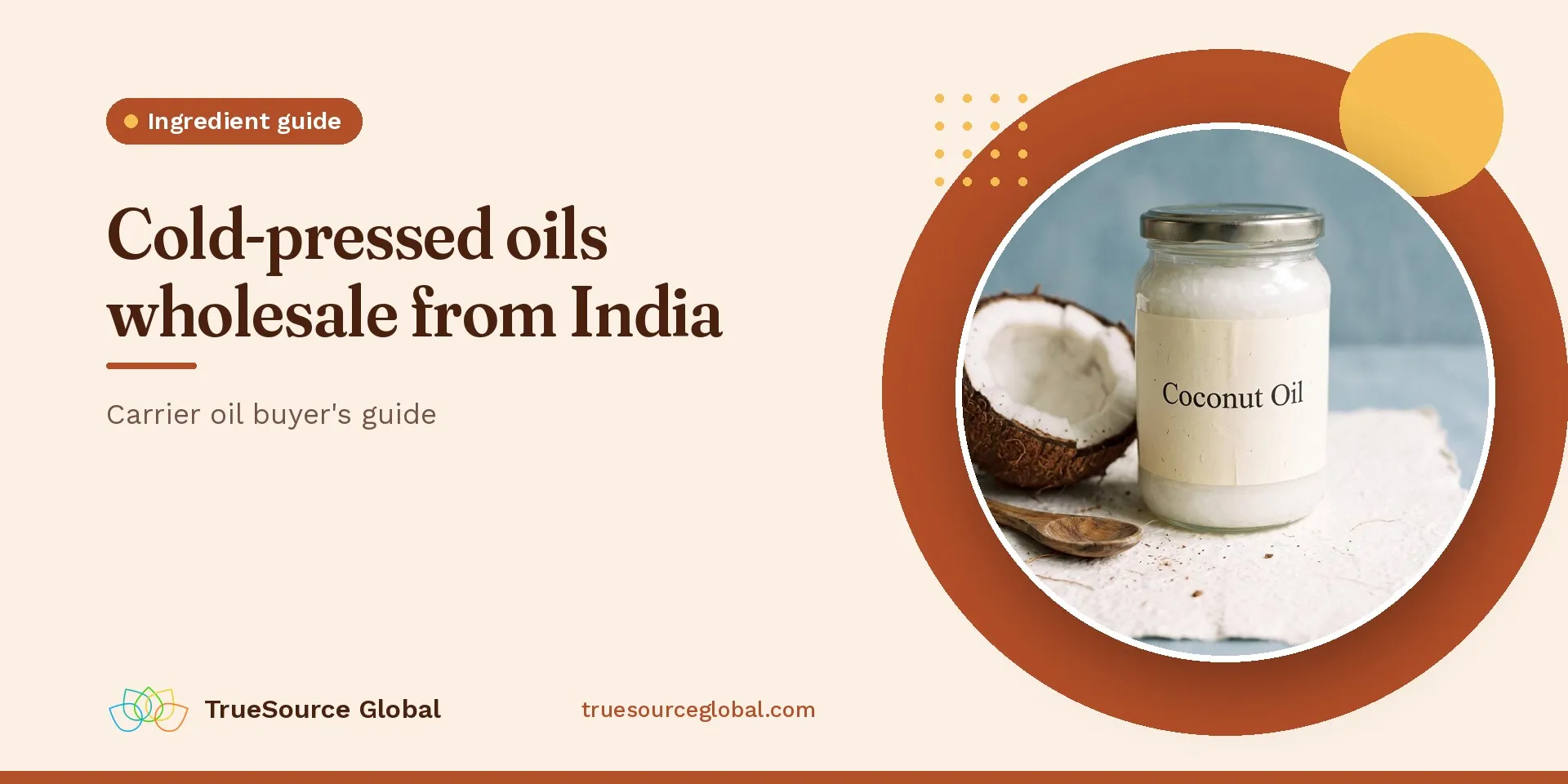
Cold-Pressed Oils Wholesale from India: Carrier Oil Buyer's Guide
How to buy cold-pressed carrier oils in bulk from India: sesame, coconut, almond and more. Grades, the specification to agree, tests, packaging and cosmetic rules.
To buy cold-pressed carrier oils wholesale from India, decide the end use first: food, cosmetic or massage. That choice sets the grade, the documents and the rules you must meet. Then write one specification per oil and ask each supplier for a batch Certificate of Analysis (CoA) from an independent lab. Quote against the same specification every time, because “cold-pressed” on a price list can mean different things.
A carrier oil is a plain plant oil used on its own or as the base for a blend. Brands buy them for hair oils, body oils, massage oils, soaps and balms, and some for cooking. Our range of cold-pressed oils includes sesame, coconut, sweet almond, jojoba, hemp seed, rosehip seed, moringa, neem seed and olive oil, among others. Each product page states its own use and grade options.
Which cold-pressed oil suits which use?
Match the oil to the job before you ask for prices. The descriptions below follow our product pages, so ask for the exact grade you need.
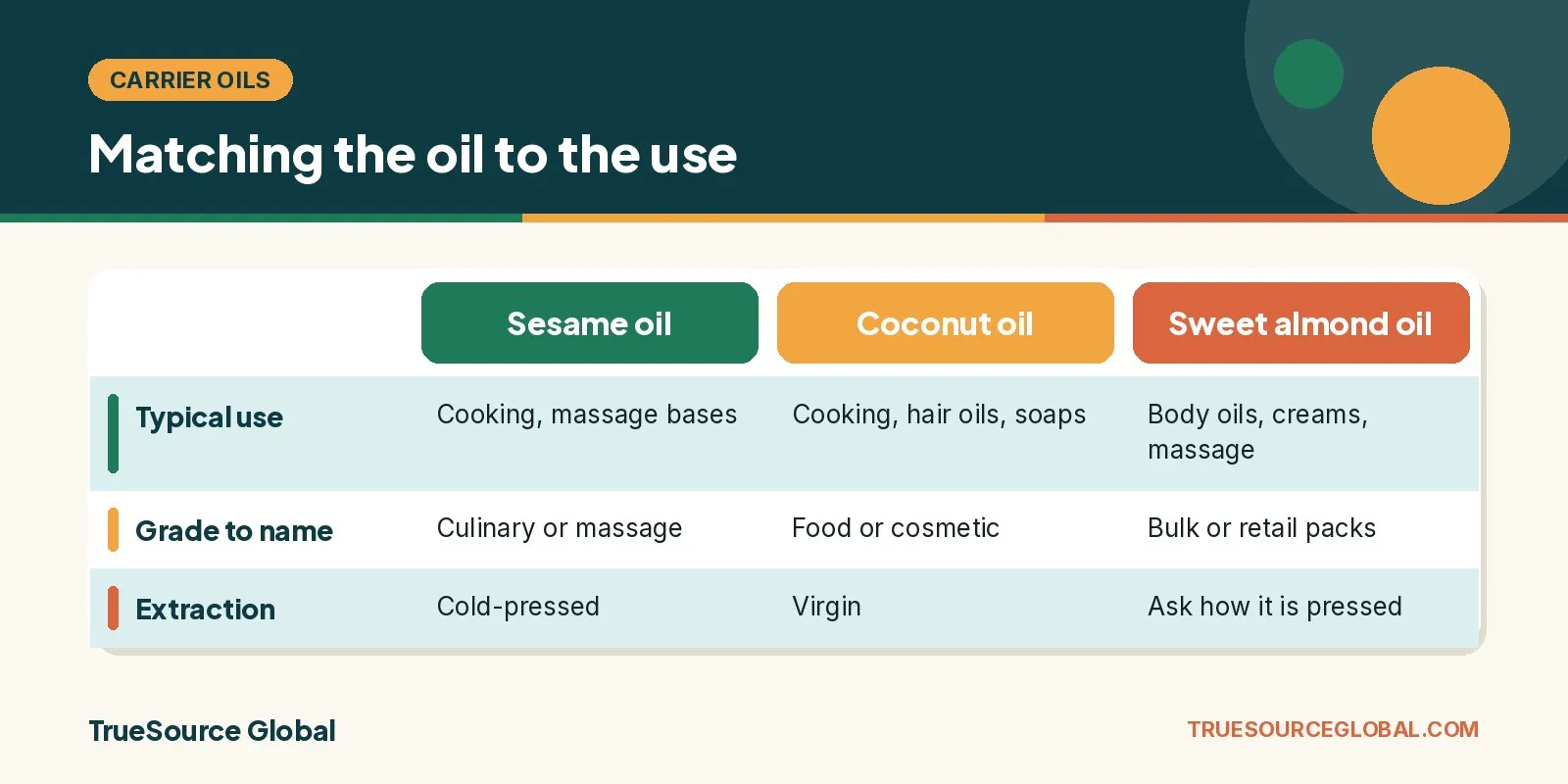
| Oil | Plant | Typical trade use | What to specify |
|---|---|---|---|
| Sesame oil | Sesamum indicum | Cooking oil, massage and Ayurvedic oil bases | Culinary or massage grade |
| Coconut oil | Cocos nucifera | Cooking oil, hair oils, soaps, balms | Virgin grade, food or cosmetic |
| Sweet almond oil | Prunus amygdalus dulcis | Body oils, creams, hair oils, massage | Bulk drums or retail packs |
| Jojoba oil | Simmondsia chinensis | Face oils, beard oils, hair serums | Organic documents if you buy organic |
| Neem seed oil | Azadirachta indica | Soaps, hair care, skin care | Cosmetic or agricultural grade |
The same plant can come in more than one grade. A culinary sesame oil and a massage sesame oil are not interchangeable, so name the grade in your enquiry.
What goes into a carrier oil specification?
Put each line in writing and ask every supplier to confirm it before you compare prices.
- Plant and part: the Latin name and the part pressed (seed, kernel, nut or fruit).
- Extraction: cold-pressed, and how the oil is filtered. If it is refined, say so.
- Appearance: colour, clarity and odour, described so your goods-in team can check them.
- Acid value and peroxide value: limits and methods. Both affect how the oil keeps.
- Fatty acid profile: the range you expect for that oil, with the method.
- Grade and documents: food, cosmetic or massage, conventional or organic. For organic, ask for the certificate and its scope.
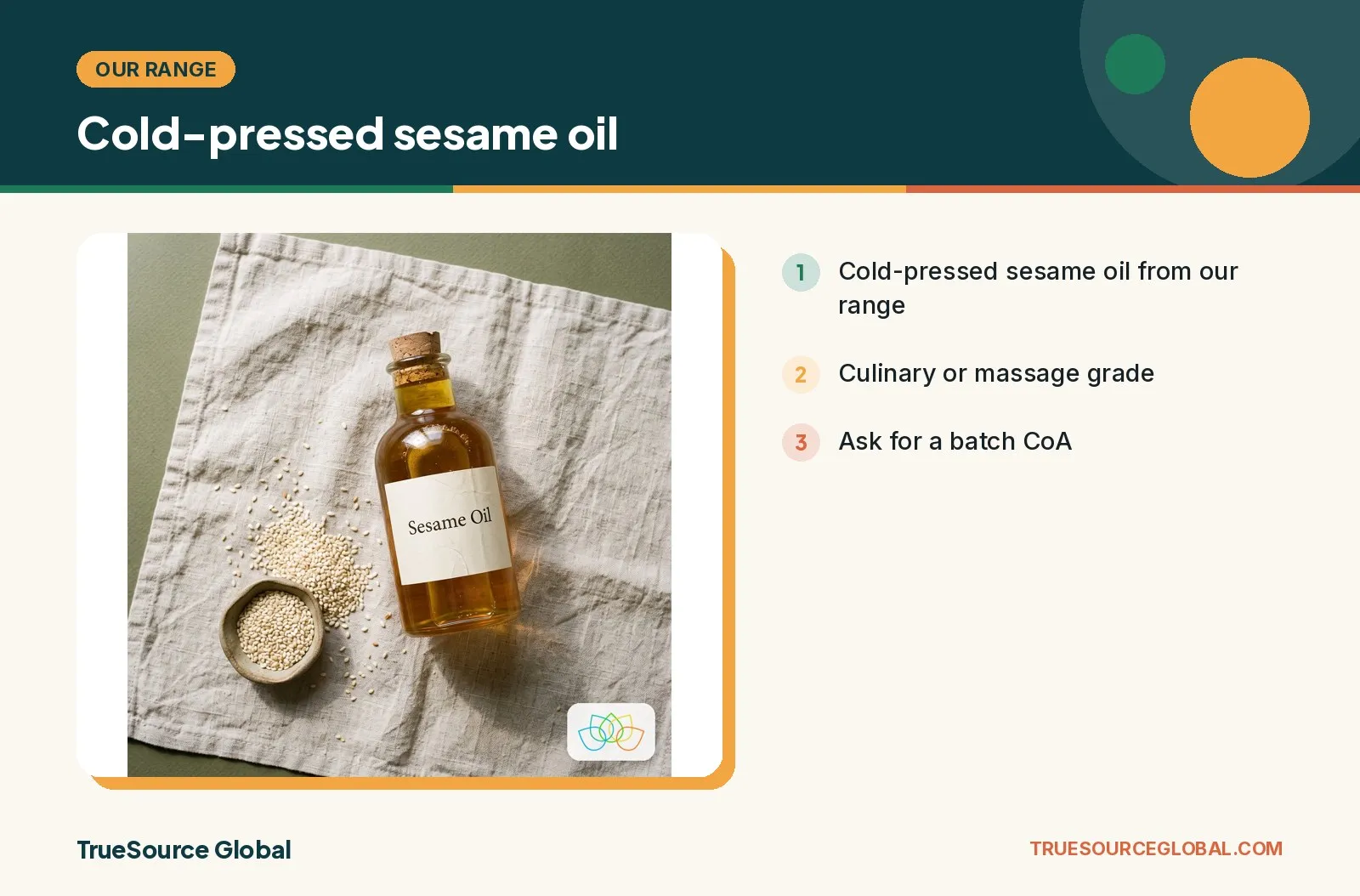
Which tests and documents should you ask for?
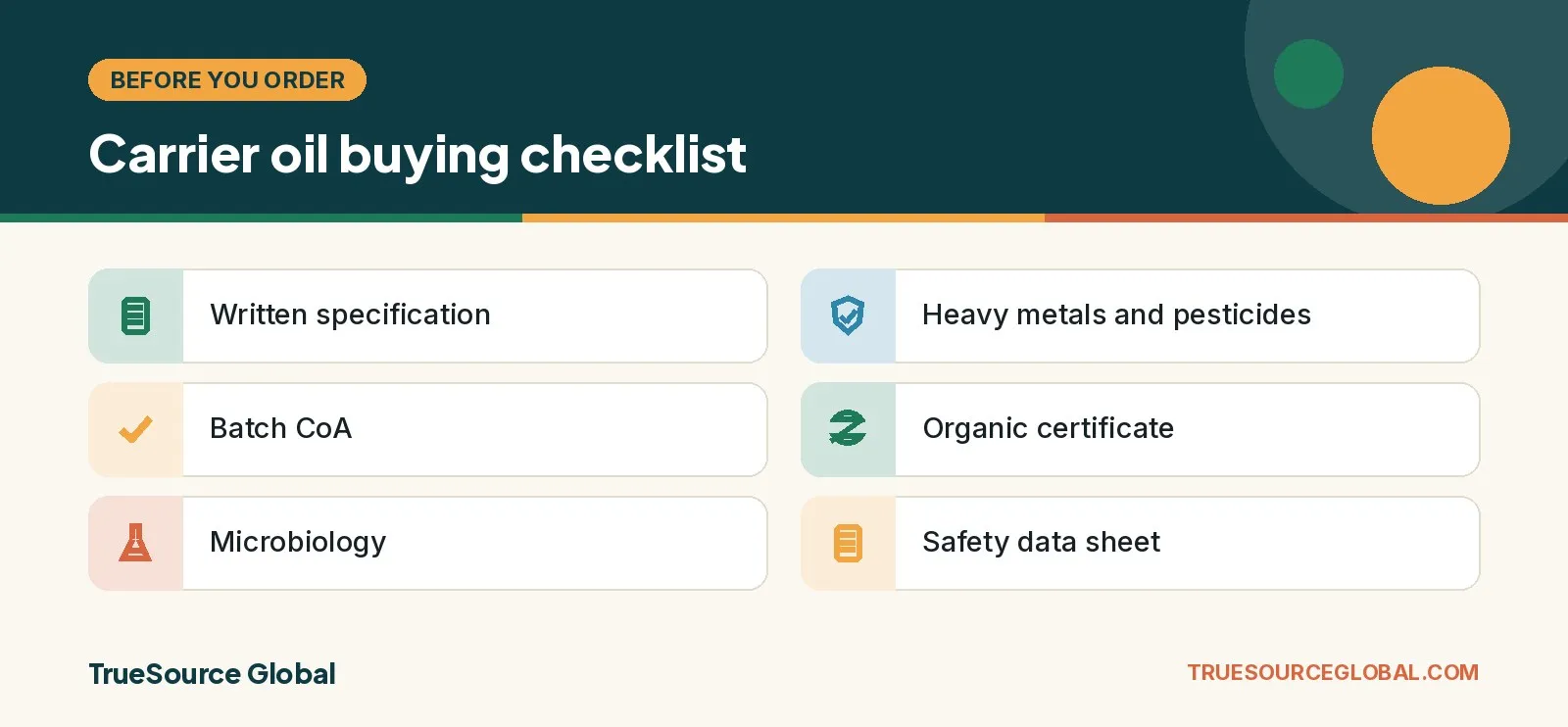
Ask for a batch CoA that gives the figure, the method and the limit for each test, with the lab name and batch number:
- the quality tests in your specification
- microbiology, if the oil goes into a cosmetic
- heavy metals and a pesticide screen suited to your market
- organic certificate, if you buy organic
- safety data sheet and the documents your safety assessor or food-safety adviser asks for
Our quality and documentation page explains what we arrange for each batch. Keep a retained sample from every batch so you can compare later deliveries.
What should make you cautious about a supplier?
- A quote with no specification, or one that only says “cold-pressed”.
- A CoA that reads “complies” with no figure, method or limit.
- A CoA with no lab name or batch number, or the same CoA for every order.
- No answer on how the oil is pressed, filtered or stored.
- A sample that looks or smells different from the first shipment.
- An oil sold for both food and cosmetic use with no sign of which documents apply.
What are the MOQ, sample and packaging terms?
We work with partner producers and do not own factories. For most products the minimum is 500 units per SKU. Pilot runs of 100 to 250 units are available at a slightly higher unit cost. Samples dispatch in 5 to 7 working days. Production takes 7 to 14 business days after order and artwork approval. We reply to quote requests within 12 hours.
Oils are supplied in bulk drums or in retail bottles with private label bottling, depending on the product. Packaging options include glass bottles, PET jars and tin boxes. Ask what the container is made of and how it is sealed, because oils need a clean, airtight pack.
What are the market rules for finished products?
The rules depend on what you make, not on the oil alone.
- Cosmetics in the EU: Regulation (EC) No 1223/2009 sets the requirements, including a safety assessment and a responsible person in the EU.
- Cosmetics in the UK: Great Britain has its own rules. Start with the GOV.UK guidance on making cosmetic products available in Great Britain.
- Cosmetics in the US: the Modernization of Cosmetics Regulation Act of 2022 added facility registration, product listing and safety substantiation duties.
- Food use: if the oil is sold as food, food rules apply instead, including food facility registration in the US. Check the oil-specific limits for your market with your regulator or adviser before you order.
Skin and hair claims are tightly controlled in all three markets. Describe the product and its documents, and check every claim with your regulator or adviser before you print a label.
Carrier oil buyer checklist
- The end use chosen: food, cosmetic or massage.
- A written specification per oil, with limits and methods.
- A sample approved against it before the first order.
- A batch CoA with figures, methods and limits.
- Your own lab check on the first batch.
- Documents agreed with your safety assessor or food-safety adviser.
- Pack, sealing and shipping documents agreed.
Next steps
Browse the cold-pressed oils range. If you buy a single oil in volume, our castor oil buying guide goes deeper on one grade, and our essential oil suppliers guide covers aromatic oils. For your own brand, read about private label. When you have a volume in mind, request a quote or book a call.
Frequently asked questions
What does cold-pressed mean for a carrier oil?
Cold-pressed oil is pressed from seeds, nuts or fruit without added heat, then usually filtered. It keeps more of the raw material's colour and odour than a refined oil. The term is not standardised across suppliers, so ask how the oil is pressed and filtered and write it into your specification.
Can the same oil be bought for food and for cosmetics?
Some oils, such as sesame and coconut, are traded for both uses, but the grade, the documents and the rules differ. A food grade needs food-safety documents, and a cosmetic grade needs documents your safety assessor can use. State the end use in your enquiry so the supplier quotes the right grade.
Which tests should a carrier oil Certificate of Analysis show?
Ask for the acid value, peroxide value, moisture, colour and the fatty acid profile that matches your specification. Add microbiology, heavy metals and a pesticide screen suited to your market. Each line should give a figure, a method and a limit, with the lab name and batch number.
What is the minimum order for cold-pressed oils from TrueSource Global?
Most products run at 500 units per SKU, with pilot runs of 100 to 250 units at a slightly higher unit cost. Bulk formats such as drums are agreed per quote. Samples dispatch in 5 to 7 working days, and we reply to quote requests within 12 hours.
Sources
Ready to source this from India?
Tell us the product, volume and market. We'll reply within 12 hours with a quote, MOQ and sample plan, with no obligation.