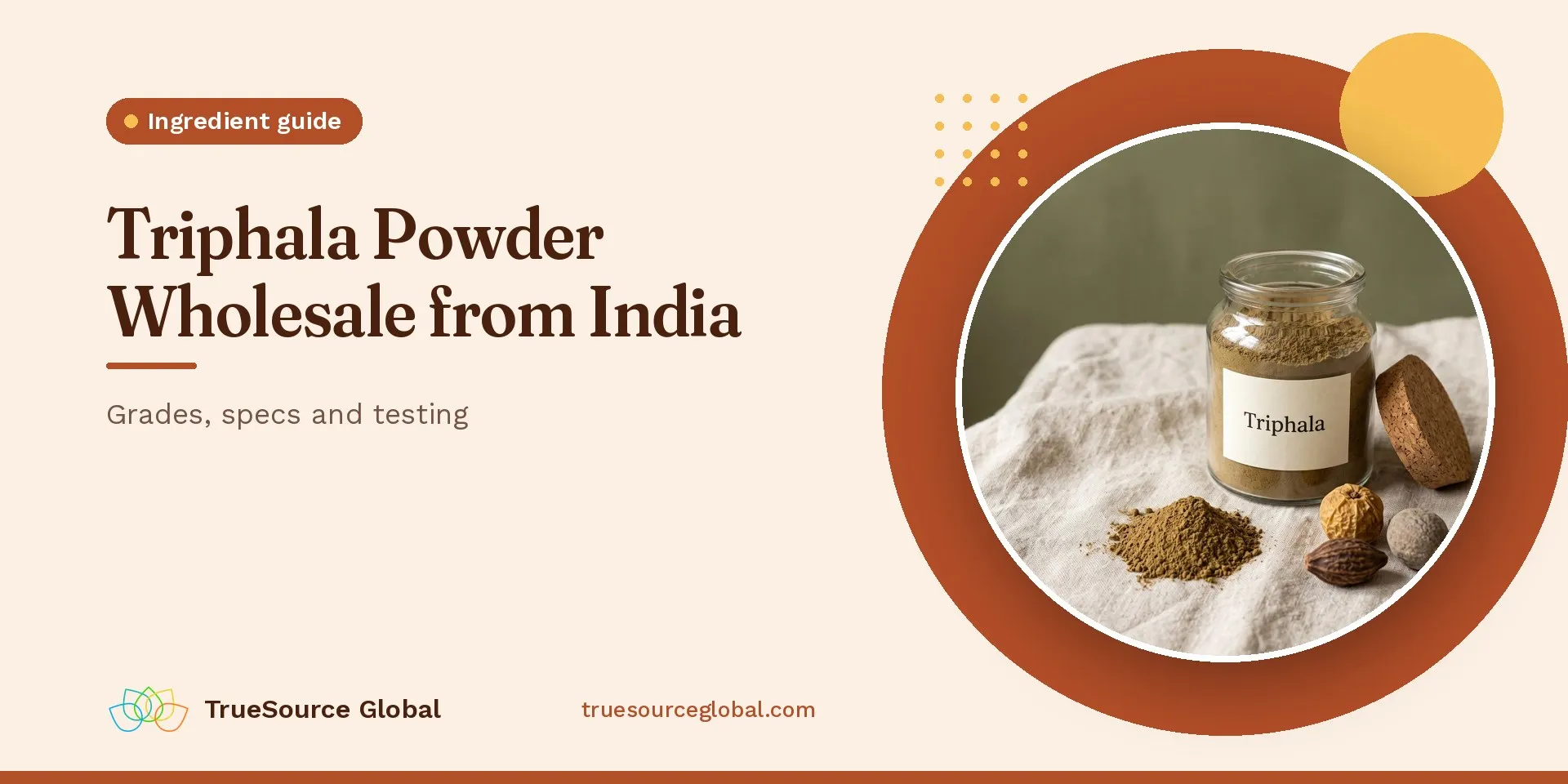
Triphala Powder Wholesale from India: Grades, Specs and Testing
Buying triphala powder wholesale from India? What to specify (fruit ratio, mesh, moisture), which tests and documents to ask for, and how to compare suppliers.
To buy triphala powder wholesale from India, write a specification before you ask for prices: the three fruits, the blend ratio, mesh size and moisture. Then ask for a batch Certificate of Analysis (CoA) from an independent lab, approve a sample, and check your market’s rules. Quotes only compare when they are for the same specification.
Triphala is a classic Ayurvedic blend of three dried fruits, traditionally used in Ayurveda. Buyers searching for a triphala supplier need more than a price list. This guide covers what to specify, test and document, from the trade side.
What do buyers specify in triphala powder?
The product is a blend, so identity and ratio matter as much as purity. Write these fields into your specification:
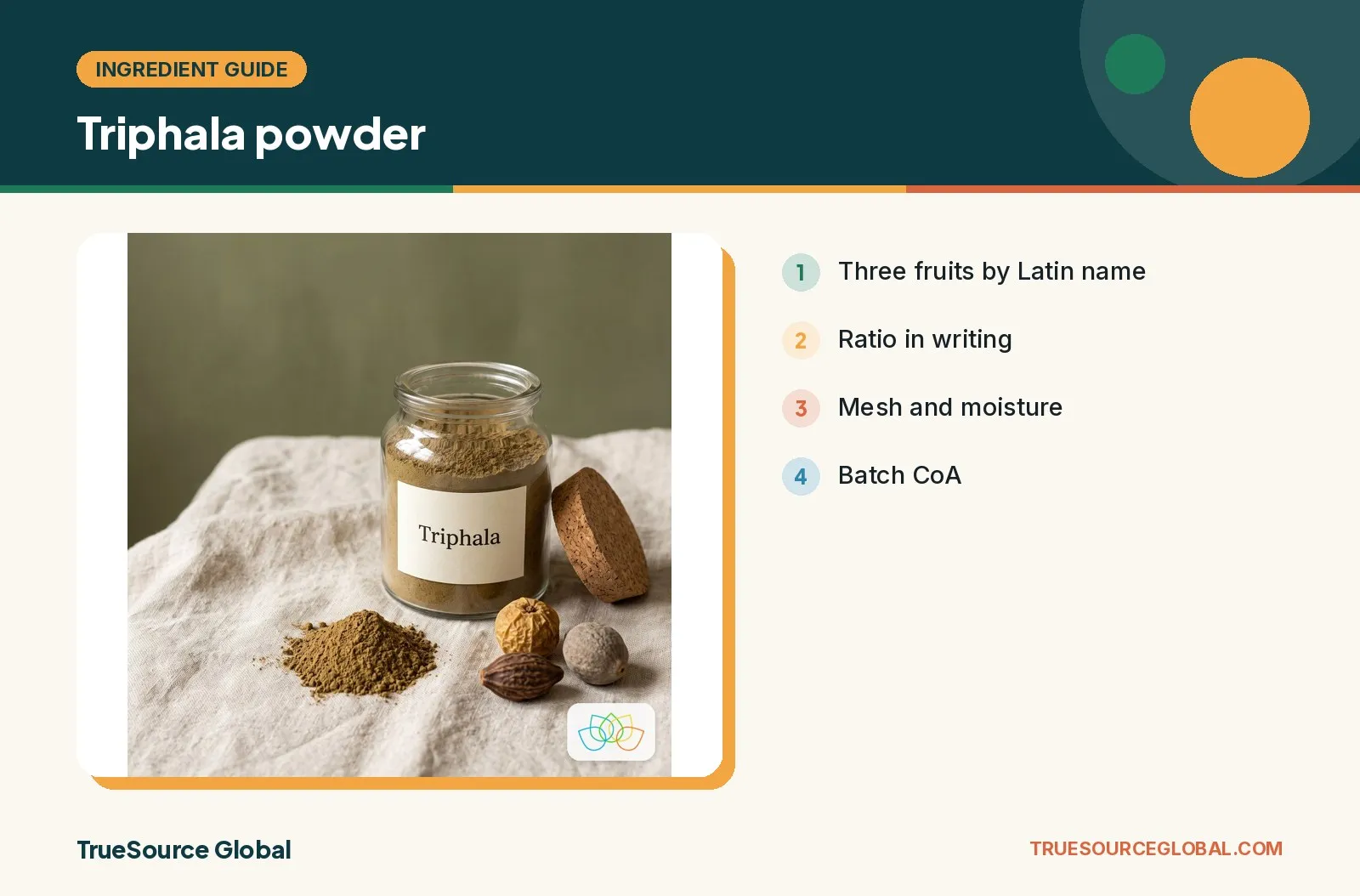
- The three fruits, by Latin name: haritaki (Terminalia chebula), bibhitaki (Terminalia bellirica) and amla (Phyllanthus emblica, also written Emblica officinalis). Buying amla on its own? See our amla powder buying guide.
- Ratio: the Ayurvedic Formulary of India describes a 1:1:1 mix of the ground dried fruits, as cited in published analytical work. Some suppliers sell other ratios. Ask for the ratio in writing, and whether it is by weight.
- Form and mesh: fine powder for capsules, coarser cut for tea or blending. Name the mesh and the sieve method.
- Moisture and appearance: state a moisture limit and a colour, odour and texture description, so you can check each delivery against it.
- Origin and plant part: fruit, not stem or leaf, and the state or region if it matters to your label.
How do the formats compare?
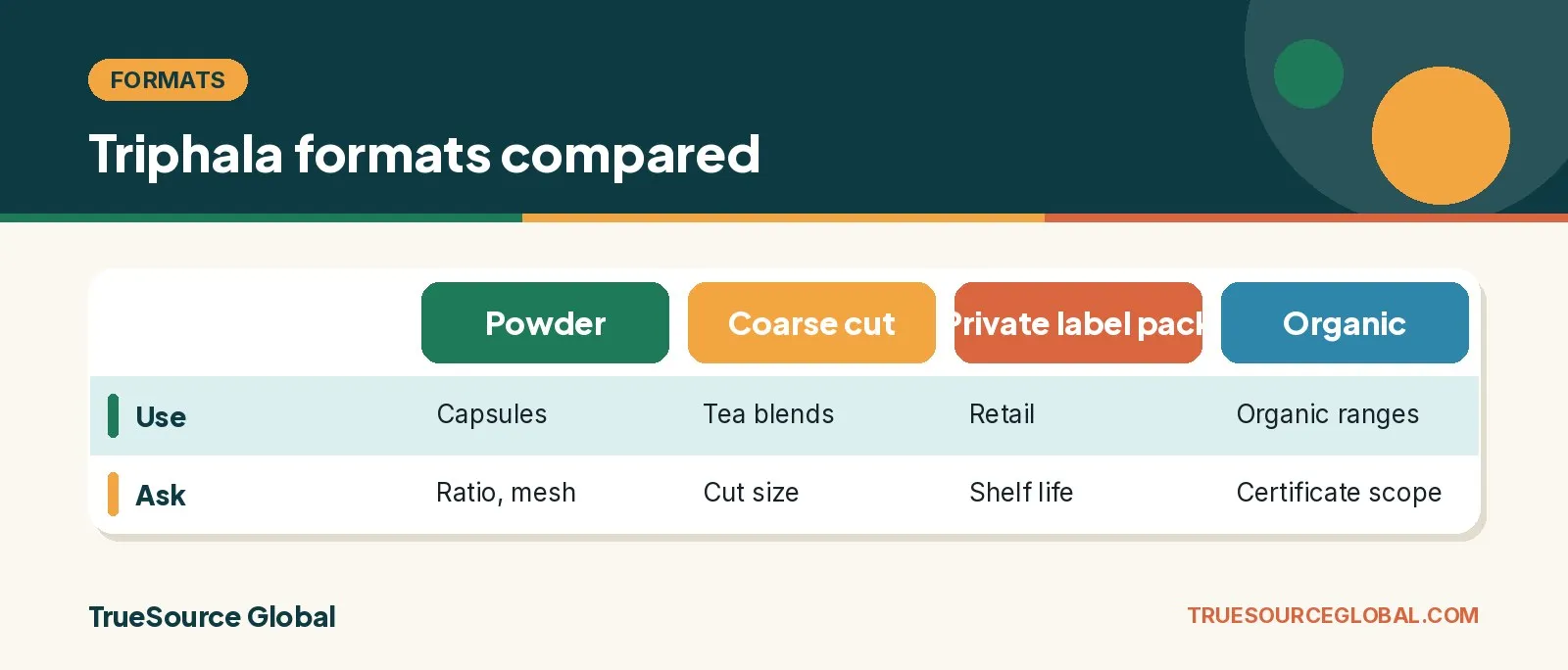
| Format | Typical use | What to ask |
|---|---|---|
| Plain powder (single blend) | Capsules, tablets, retail pouches | Ratio, mesh, moisture, CoA per batch |
| Coarse cut | Tea blends | Cut size, foreign matter, sieve method |
| Private label pack | Finished retail product | Pack material, label, shelf life |
| Organic powder | Organic ranges | Certificate scope and the certifying body |
Do not compare a powder quote with a finished private label quote. They answer different questions.
Which tests and documents should come with a batch?
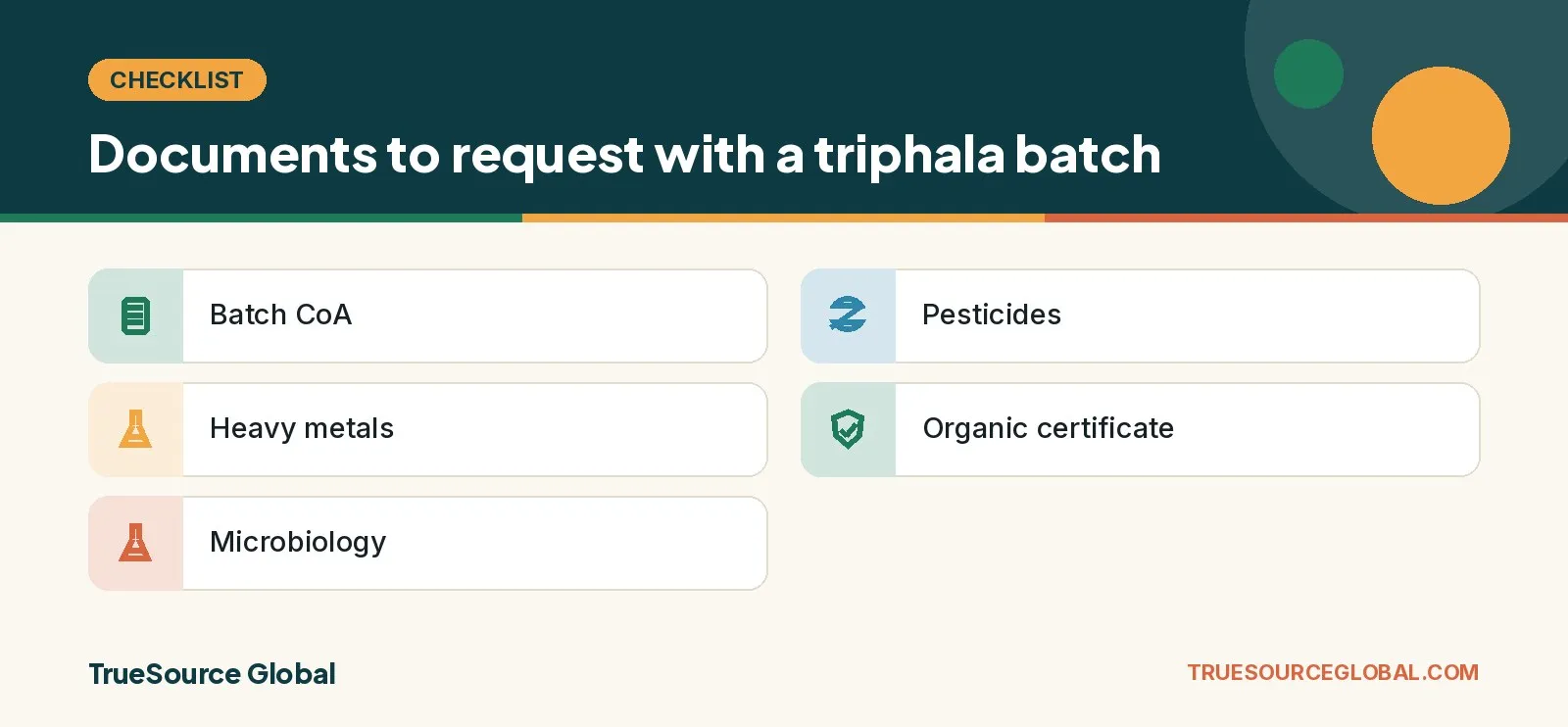
A CoA should give figures, the method and the limit, with the lab’s name and the batch number. For triphala, ask for:
- Heavy metals: lead, cadmium, arsenic and mercury, usually by ICP-MS.
- Microbiology: total plate count, yeast and mould, and pathogens such as E. coli and Salmonella.
- Pesticide residues: a screen suited to your market.
- Identity and quality: microscopy or TLC against a reference. Published monograph work on triphala churna also reports total tannins and uses gallic acid as a TLC marker, but there is no single marker figure every buyer must hit. Agree a method and a range with your supplier.
- Moisture and, for plant powders, a mycotoxin screen such as aflatoxin where your market requires it.
- Organic certificate if you buy organic, with scope covering this product.
Our quality and documentation page lists what we arrange. Our batch documents include third-party lab Certificates of Analysis, with heavy metals and microbiology.
What are the minimums, samples and packaging?
We work with partner producers rather than owning factories. For most products the minimum is 500 units per SKU, and pilot runs from 100 to 250 units are available at a slightly higher unit cost. Samples dispatch in 5 to 7 working days, production takes 7 to 14 business days after order and artwork approval, and we reply to quote requests within 12 hours.
Packaging options include kraft pouches, glass bottles, PET jars and tin boxes. Bulk pack formats are agreed per quote. Ask the producer how the pack is sealed and what shelf life they assign, since plant powders take up moisture.
What are the market rules in the US, EU and UK?
- United States: facilities making or holding dietary supplements must be registered with the FDA, and 21 CFR Part 111 sets manufacturing rules. The importer has Foreign Supplier Verification Program duties. No triphala is “FDA approved”.
- European Union: contaminant limits are set in Regulation (EU) 2023/915. Always read the current consolidated Annex I, because it is amended.
- United Kingdom: see the Food Standards Agency pages on importing food supplements and novel foods.
Permitted claims depend on the market, so ask the regulator before you write label copy.
Triphala buyer checklist
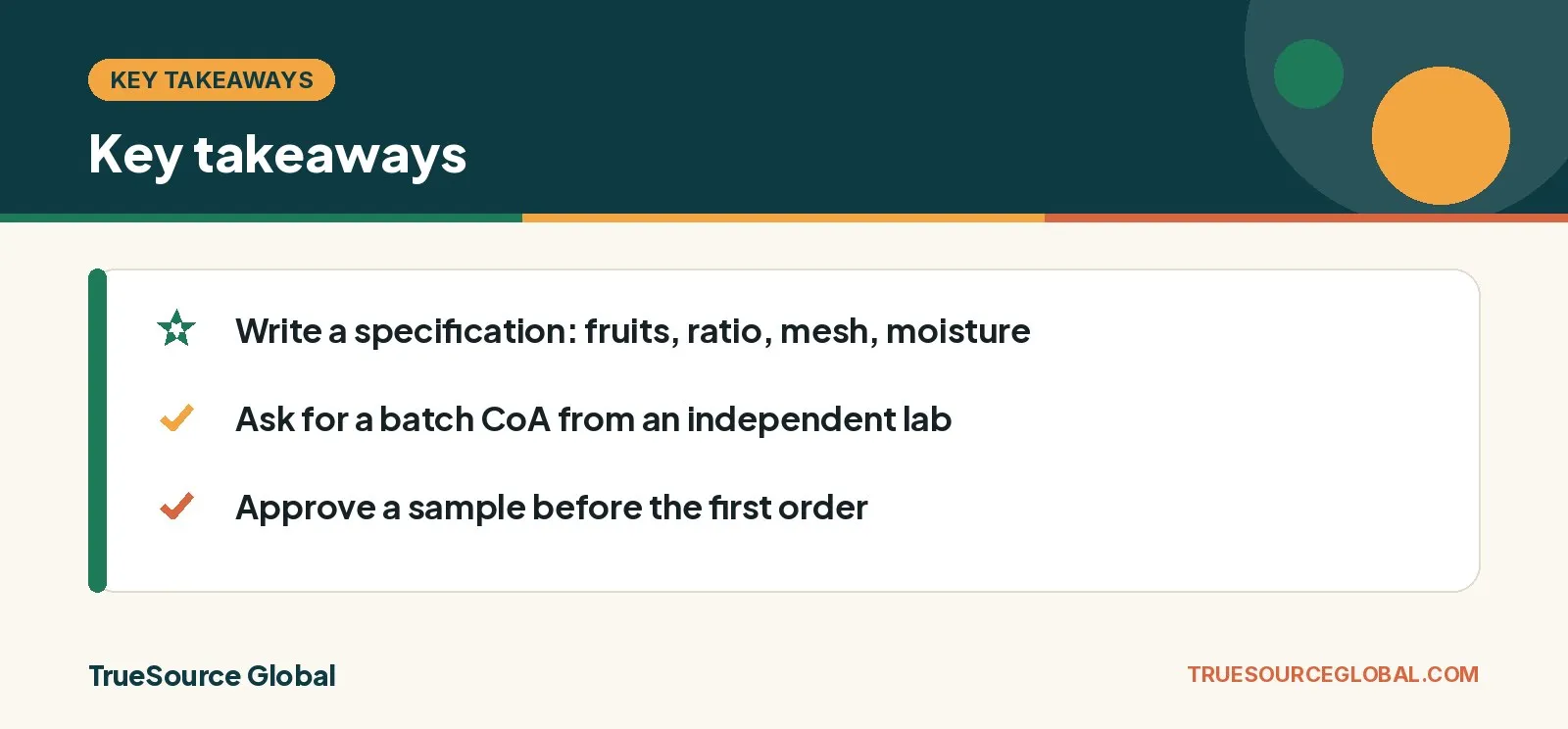
- Written specification: fruits, ratio, mesh, moisture.
- Pre-shipment sample approved against it.
- Batch CoA from an independent lab with figures and methods.
- Your own lab check on the first batch.
- Organic certificate scope, if relevant.
- Pack format, label and shipping documents agreed.
Next steps
See our Triphala page and the wider Ayurvedic herbs and supplements range. If you want your own label, read about private label. For a comparison across suppliers, see our guide to Ayurvedic ingredient suppliers in India for US buyers. When you know your volume, request a quote.
Building a pet line? AyurPet’s triphala guide for dogs shows how this blend is described to pet parents.
Frequently asked questions
What is in triphala powder?
Triphala is a blend of three dried fruits: haritaki (Terminalia chebula), bibhitaki (Terminalia bellirica) and amla (Phyllanthus emblica, also written Emblica officinalis). The traditional formula in the Ayurvedic Formulary of India uses them in equal parts, so a supplier should state the ratio they actually use.
What should a triphala Certificate of Analysis include?
Ask for lead, cadmium, arsenic and mercury with the limits applied, total plate count, yeast and mould and named pathogens, moisture, and an identity test. Published monograph work on triphala churna also reports microscopy, TLC and total tannins. A result that only says complies, with no figure and no method, is not enough.
What mesh size is triphala powder sold in?
There is no single standard. Mesh depends on your product: finer powder for capsules and tablets, coarser for tea cuts or blends. State the mesh you need and how it is measured, and compare suppliers only on the same mesh.
Is triphala FDA approved?
No. The FDA does not approve dietary supplements or the ingredients in them. The producing facility must be registered with the FDA and follow US supplement manufacturing rules, and the importer has Foreign Supplier Verification Program duties.
What is the minimum order for triphala powder?
For most products our minimum is 500 units per SKU, and pilot runs from 100 to 250 units are available at a slightly higher unit cost. Samples dispatch in 5 to 7 working days. Tell us the pack format and volume and we will confirm in the quote.
Sources
- PMC: RP-HPLC method for Triphala Curna (cites the Ayurvedic Formulary of India 1:1:1 preparation)
- ResearchGate: Ayurvedic formulation Triphala churna, a monograph (test parameters)
- FDA: Registration of food facilities, guidance for industry
- FDA: FSMA final rule on Foreign Supplier Verification Programs
- eCFR: 21 CFR Part 111, current good manufacturing practice for dietary supplements
- EUR-Lex: Regulation (EU) 2023/915 on maximum levels for contaminants in food
- Food Standards Agency: Importing food supplements and health foods
- Food Standards Agency: Novel foods authorisation guidance
Ready to source this from India?
Tell us the product, volume and market. We'll reply within 12 hours with a quote, MOQ and sample plan, with no obligation.