Pet Products Manufacturers in India: A Buyer's Guide by Category
What pet products manufacturers in India make well, from treats and soft chews to beds and harnesses: MOQs, customisation, documents and how to vet them.
India’s pet product manufacturers are strongest in natural chews and dehydrated treats, functional soft chews and toppers, fabric beds and houses, webbing harnesses, collars and leashes, and apparel and steel bowls. Choose by category: food makers need registration, batch testing and export eligibility; hard-goods makers need material specifications, sizing control and product-safety evidence.
That split matters more than any list of factory names. A buyer who vets a bed maker like a treat maker asks the wrong questions, and the reverse is worse. This guide goes category by category: how each product is made, what drives the minimum order, what you can customise, which documents to ask for, and how to vet the producer.
What do pet products manufacturers in India make well?
India’s strengths follow its raw materials and its existing industries. Dairy and the Himalayan yak cheese tradition give the hard chews; poultry and fish processing give dehydrated treats; a large herbal and Ayurvedic ingredients base feeds toppers and soft chews; and the textile and webbing industries make beds, apparel, harnesses and leashes.
| Category | Typical products | Made from | Product type for import |
|---|---|---|---|
| Yak cheese chews | Bars, puffs, nubs, flavoured chews | Yak and cow milk, salt, lime juice | Animal-origin food |
| Dog and cat treats | Dehydrated chicken, duck and fish jerky, chew sticks, milk bones, biscuits | Meat, fish, egg, milk, grains | Animal-origin food (most recipes) |
| Functional soft chews | Joint, gut, skin and coat, dental chews | Active ingredients in a chewable base | Animal food or supplement, by market |
| Meal toppers and blends | Herbal powders with turmeric, ashwagandha, moringa, amla | Botanicals, sometimes dairy or oils | Animal food; animal-origin if it has dairy, fish or meat |
| Beds, sofas and houses | Donut beds, sofas, foam baskets, cooling mats, cat houses | Fabric, foam, fibre fill, plastic | Consumer product |
| Harnesses, collars and leashes | Padded, reflective and printed harnesses, rope leashes, sets | Nylon webbing, rope, padding, metal or plastic hardware | Consumer product |
| Bowls, apparel and accessories | Steel bowls, stands, T-shirts, hoodies, bandanas, grooming items | Stainless steel, rubber, cotton and blends | Consumer product |
How are treats and chews made and sold?
Yak cheese chews are pressed from cooked milk curd and dried for weeks until hard. Dehydrated treats are cut, dried at controlled temperatures and packed in moisture-barrier pouches. The variables that decide quality are moisture, size and hygiene, so your specification should name the moisture release limit, the size bands and tolerances, and the microbiology tests for each batch. Our guide on sourcing Himalayan yak chews in bulk shows a full specification.
MOQ logic. For a dog treats manufacturer in India, the minimum is set by the batch the dryer or press runs and by the printed pouch. At TrueSource most pet products start at 100 units, most products run at around 500 units per SKU, and printed custom packaging can carry its own minimum.
Customisation. Size bands, flavours from the producer’s recipe list, pack size, pouch type and your artwork. A new recipe is a development project, not a label change.
Documents. A batch Certificate of Analysis, the producer’s food facility registration for the US, and for animal-origin treats the health certificate and establishment approval your market requires. Check those import routes before you order: our guide on how to import pet treats from India sets them out for the US, UK and EU.
How do private label soft chews and toppers work?
Private label dog treats and supplements in soft chew or powder form are made in a different kind of facility: one that blends and doses actives, controls water activity and packs into jars or pouches. Our soft chews are made in a GMP-certified partner facility. For recipes, pack sizes and how to order, read our dog soft chew manufacturers guide.
You can buy them three ways. White label is a ready recipe in your packaging, the fastest route. Private label adapts a catalogue recipe: strength, count, pack size. Custom formulation is a recipe developed to your brief; it takes longer and needs higher minimums.
The documents to ask for are a batch CoA covering the active ingredients, microbiology and any heavy metal limits your market or retailer sets, plus the facility’s GMP certificate. Label claims are the main risk: what a pet supplement may say differs between the US, UK and EU, so have the pack copy reviewed for each market before printing.
For examples of how Ayurvedic herbs are explained to pet parents in plain language, see AyurPet’s Ayurveda for pets course.
How are beds, harnesses and apparel made and sold?
These are sewn and assembled products, so quality comes from materials and workmanship, not from a lab test on each batch.
Beds and houses. A pet beds wholesale order from India is built from fabric, foam or fibre fill, zips and anti-slip bases. Specify the outer fabric and its weight, the fill type and density, whether the cover is removable and washable, the size chart and the carton dimensions. Beds are bulky, so carton size and compression packing affect your freight cost as much as the unit price.
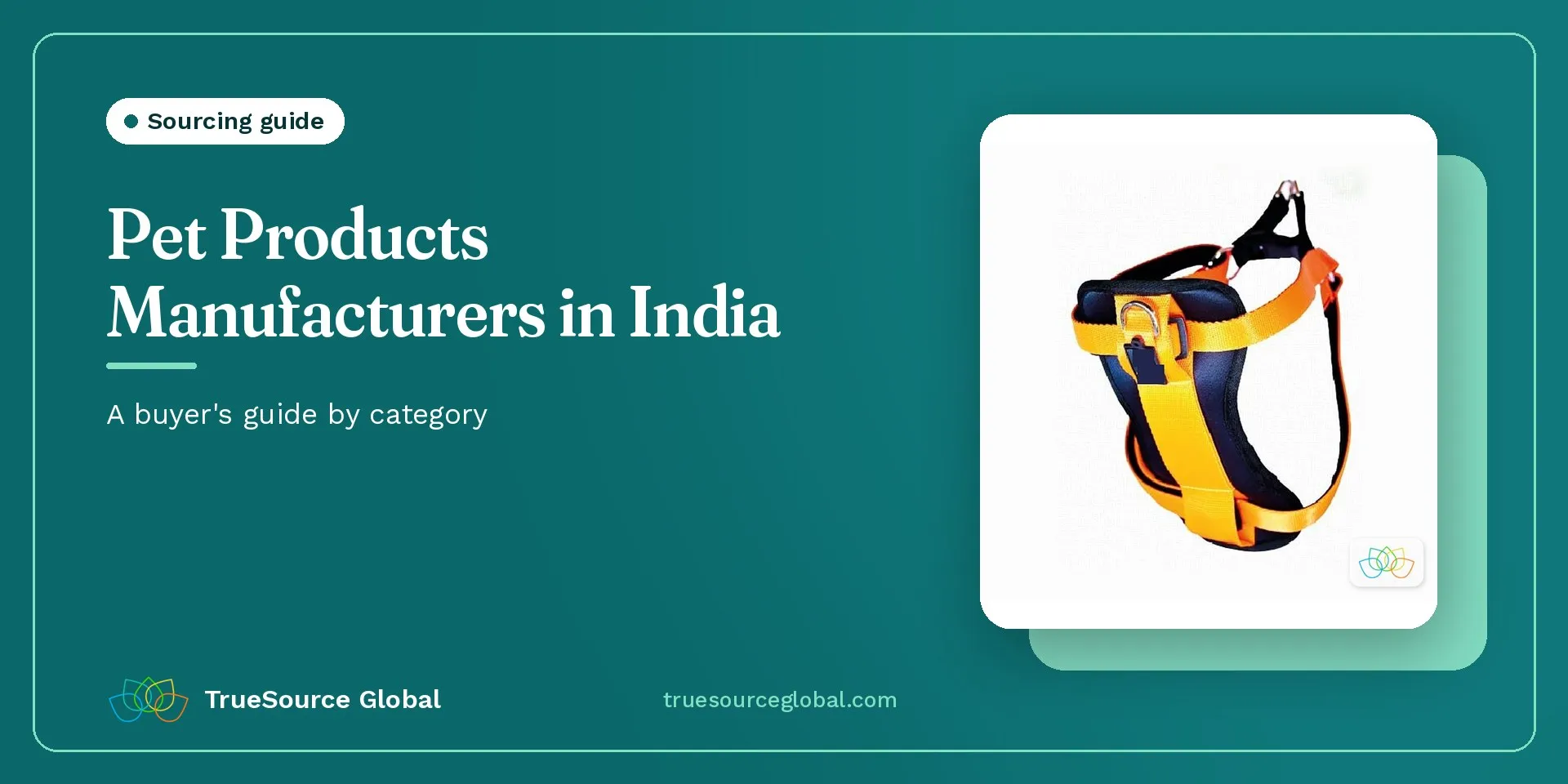
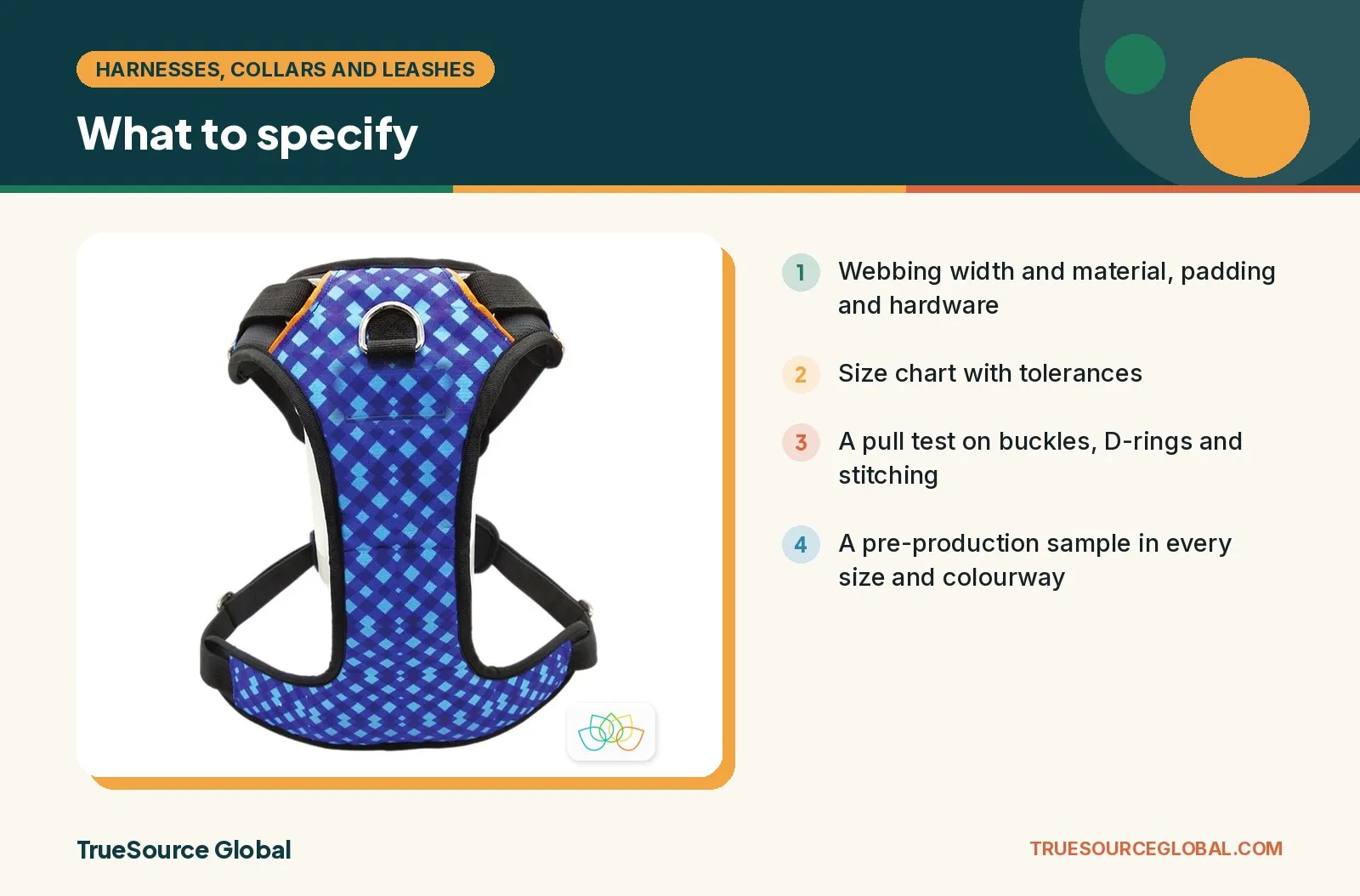
Harnesses, collars and leashes. A dog harness manufacturer in India works with nylon or polyester webbing, rope, padding, buckles, D-rings and snap hooks. Specify webbing width and material, hardware material and finish, stitching pattern at load points, reflective elements and the size chart. Agree a pull test on the hardware and stitching, by a method you both use, and keep the results with your approved sample. Your logo can go on hardware, woven labels and packaging.
Bowls and apparel. When you work with a pet accessories supplier in India, stainless steel bowls are specified by steel grade, gauge, finish and the rubber base; apparel by fabric composition, print method, size chart and care label.
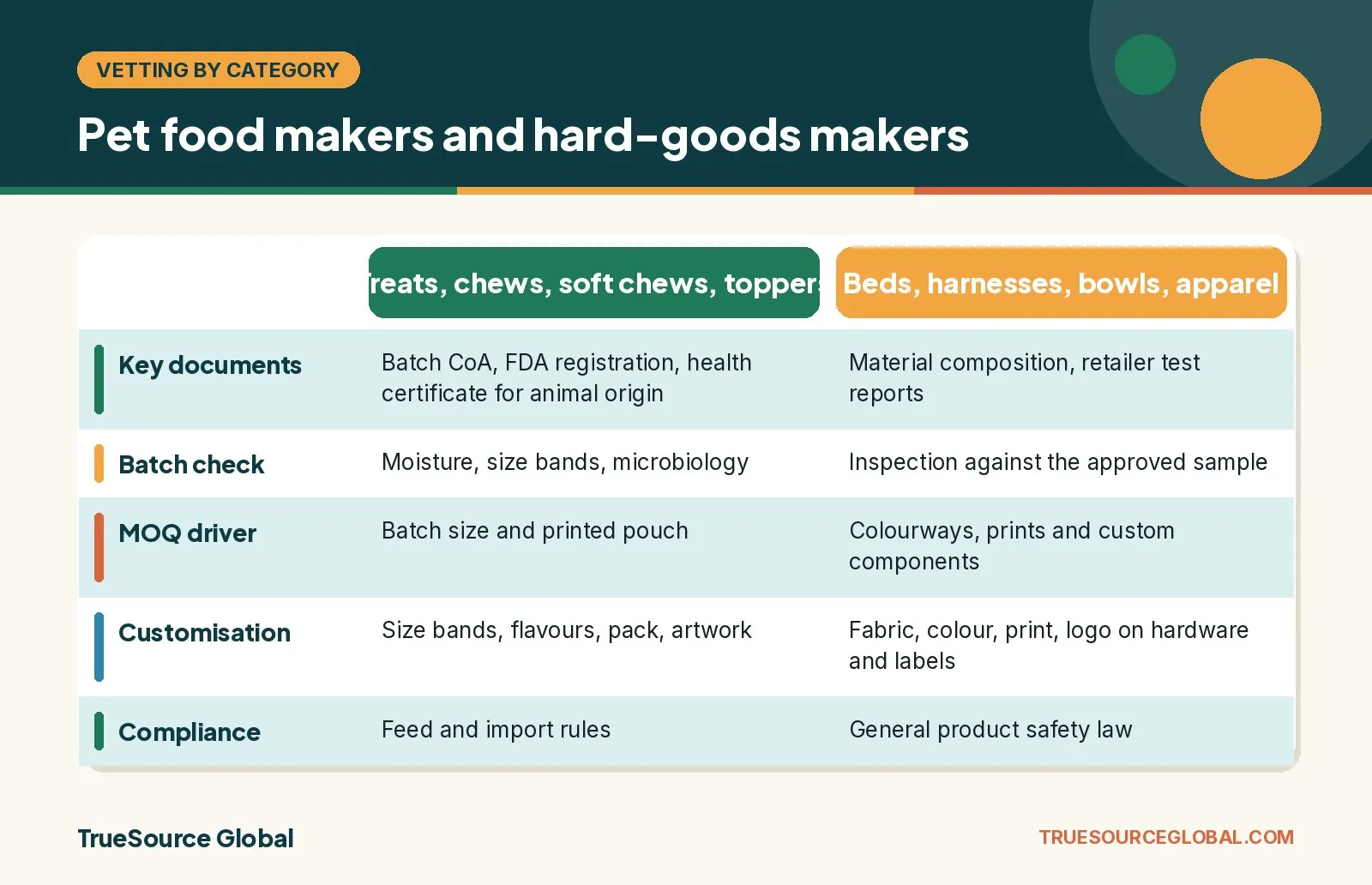
MOQ logic. Minimums for hard goods depend on colourways, prints and custom components. A stock colour in mixed sizes can start small; a custom print, dyed-to-order webbing or branded hardware can carry its own minimum from the material supplier. Ask for the MOQ per SKU and per material.
Documents and compliance. These are consumer products, not food. In Great Britain the General Product Safety Regulations 2005 require consumer products to be safe in normal or reasonably foreseeable use; in the EU the General Product Safety Regulation does the same. In the US, products sold in California may need a Proposition 65 warning if they expose people to listed chemicals, and goods must be marked with their country of origin. Ask for a material composition declaration and any test reports your retailer requires.
How should you plan samples and a first order?
Treat samples as the start of the specification, not a taste test. For food, ask for samples from a production batch with its CoA, so you see the documents as well as the product. For hard goods, ask for every size you plan to sell and at least one sample in each colourway, because sizing and colour are common points where bulk orders drift from the sample.
Then write down what you approved: photos, weights, measurements, materials and the pack. That signed specification is what the producer’s output is checked against before shipment, and it is your evidence if a batch is wrong.
Keep the first order small and simple. A pilot run of a few SKUs in stock colours or standard recipes tells you about sell-through, damage in transit and customer feedback before you commit to custom prints, new recipes or larger minimums.
How do you vet a pet products manufacturer in India?
| What to check | Food: treats, chews, soft chews, toppers | Hard goods: beds, harnesses, bowls, apparel | Evidence to ask for |
|---|---|---|---|
| Legal entity | Registered company with an Importer Exporter Code from the DGFT | Same | Company documents and the code |
| Registrations | Food licence; FDA food facility registration for the US | Not applicable | Licence and registration numbers you can check |
| Export eligibility | Establishment approved for your market for animal-origin products | Not applicable | The destination authority’s establishment list |
| Quality system | GMP or ISO certificate where claimed | In-house inspection and a written specification | Certificates, a sample inspection report |
| Batch evidence | CoA for every batch, by an in-house or external lab | Pre-shipment inspection against the approved sample | A recent CoA or inspection report, anonymised |
| Specification control | Moisture, size bands, microbiology limits | Materials, size chart with tolerances, pull test | A written specification you sign off |
| Packaging | Moisture-barrier pouches, batch number, best-before | Retail packaging, carton marks, care and origin labels | Packed samples |
| Communication | Answers in writing, in English, within a set time | Same | How quickly and clearly your first questions are answered |
Our supplier vetting checklist goes deeper on licences, CoAs and references.
What should you ask before the first order?
- Who makes the product, and where?
- What is the MOQ for the product, and separately for printed packaging or custom materials?
- Which documents come with each shipment, and can you show recent examples?
- For food: is the facility registered and approved for my market, and which tests are on every CoA?
- For hard goods: what is the material specification, and how are size and strength checked?
- How long does sample dispatch take, and what is the production lead time after artwork approval?
- What happens if a batch does not match the approved sample?
How does TrueSource work as a pet products sourcing agent?
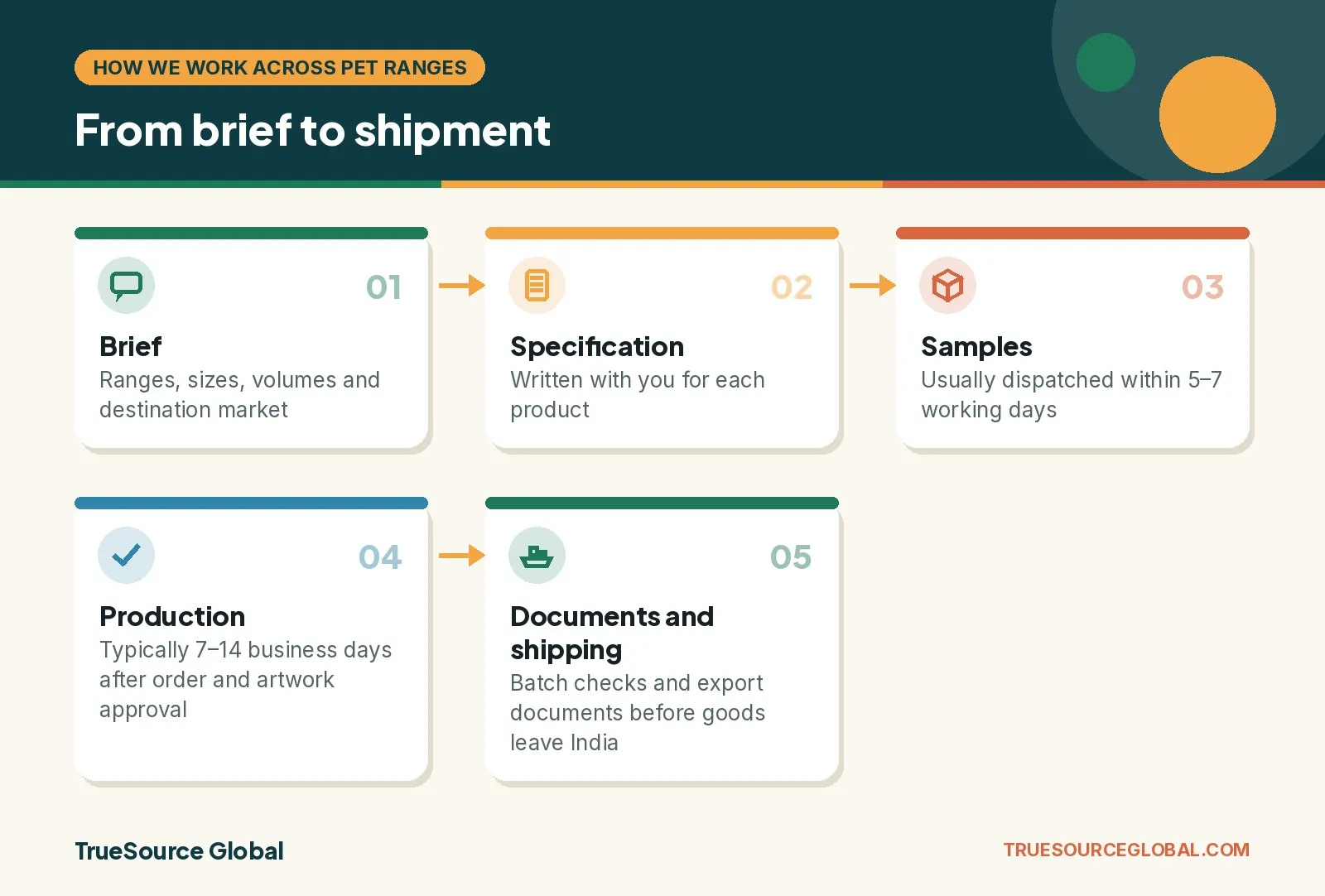
We are a sourcing agent with a network of partner producers in India, not a factory. That lets one buyer work across all seven ranges, from yak chews to bowls, with one named contact, while each product is made by a producer that specialises in it. We tell you who makes your goods.
For each range we write the specification with you, arrange samples (usually dispatched within 5–7 working days), and coordinate production, which typically takes 7–14 business days after the order and artwork are approved. Most pet products start at 100 units. We hand-sort and batch-check yak chews with the producer teams and test our recipes on our own dogs. Where the timing and the destination’s rules allow, ask us to coordinate goods from more than one partner producer onto the same shipment; animal-origin treats may need their own certificates and checks.
If you are still comparing agents, marketplaces and going direct, our pet product sourcing agent in India page sets out what each route includes and ten questions to ask any agent. Browse the pet wellness range, see how we handle private label and quality and documentation, and read how it works step by step.
To start, request a pet product quote with the ranges, sizes, volumes and destination market you have in mind, or book a call to talk through a mixed order.
Frequently asked questions
What pet products are made in India for export?
The main export categories are natural chews such as Himalayan yak cheese chews, dehydrated meat and fish treats, baked biscuits, functional soft chews and powder toppers, fabric beds, sofas and cat houses, nylon and rope harnesses, collars and leashes, and pet apparel and stainless steel bowls. Each category is made by a different kind of factory, so most buyers work with several producers.
What is the minimum order for private label dog treats from India?
It depends on the product and the packaging. At TrueSource Global most pet products start at 100 units, and most products run at around 500 units per SKU. Custom formulations need higher minimums, and printed custom packaging can carry its own minimum, so ask for the MOQ of the product and of the pack separately.
How do I check a dog harness manufacturer in India?
Ask for the webbing, padding and hardware specification in writing, a size chart with tolerances, and photos or video of a pull test on the buckles and D-rings by a method you agree. Approve a pre-production sample in every size and colourway, and check the first bulk cartons against it before shipment.
Do pet beds and harnesses need certificates to import?
They don't need the veterinary certificates that animal-origin treats do, but they must be safe under general product safety law in your market, such as the GB General Product Safety Regulations 2005 or the EU General Product Safety Regulation, and some US states have their own rules, such as California's Proposition 65. Ask the producer for material composition and any test reports your retailer requires.
Can one supplier in India make all my pet products?
Rarely. Food, soft chews, textiles and webbing are made in different facilities with different skills and licences. A sourcing agent can give you one contact across several producers, but you should still know who makes each product.
Sources
- FDA: Pet food
- FDA: Importing animal food
- FDA: Registration of food facilities
- GOV.UK: Dog chews, Import Information Note ABP/3C
- European Commission: Animal by-products, imports (entry) into the Union
- GOV.UK: General Product Safety Regulations 2005
- European Commission: Product safety and the General Product Safety Regulation
- California OEHHA: Proposition 65
- eCFR: 19 CFR Part 134, country of origin marking
- DGFT: Trade portal (certificate of origin)
Ready to source this from India?
Tell us the product, volume and market. We'll reply within 12 hours with a quote, MOQ and sample plan, with no obligation.