Essential Oil Suppliers in India for Wholesale and Private Label (2026)
Choosing essential oil suppliers in India for wholesale and private label: what to specify, GC-MS and CoA checks, packaging, five ways to buy and a checklist.
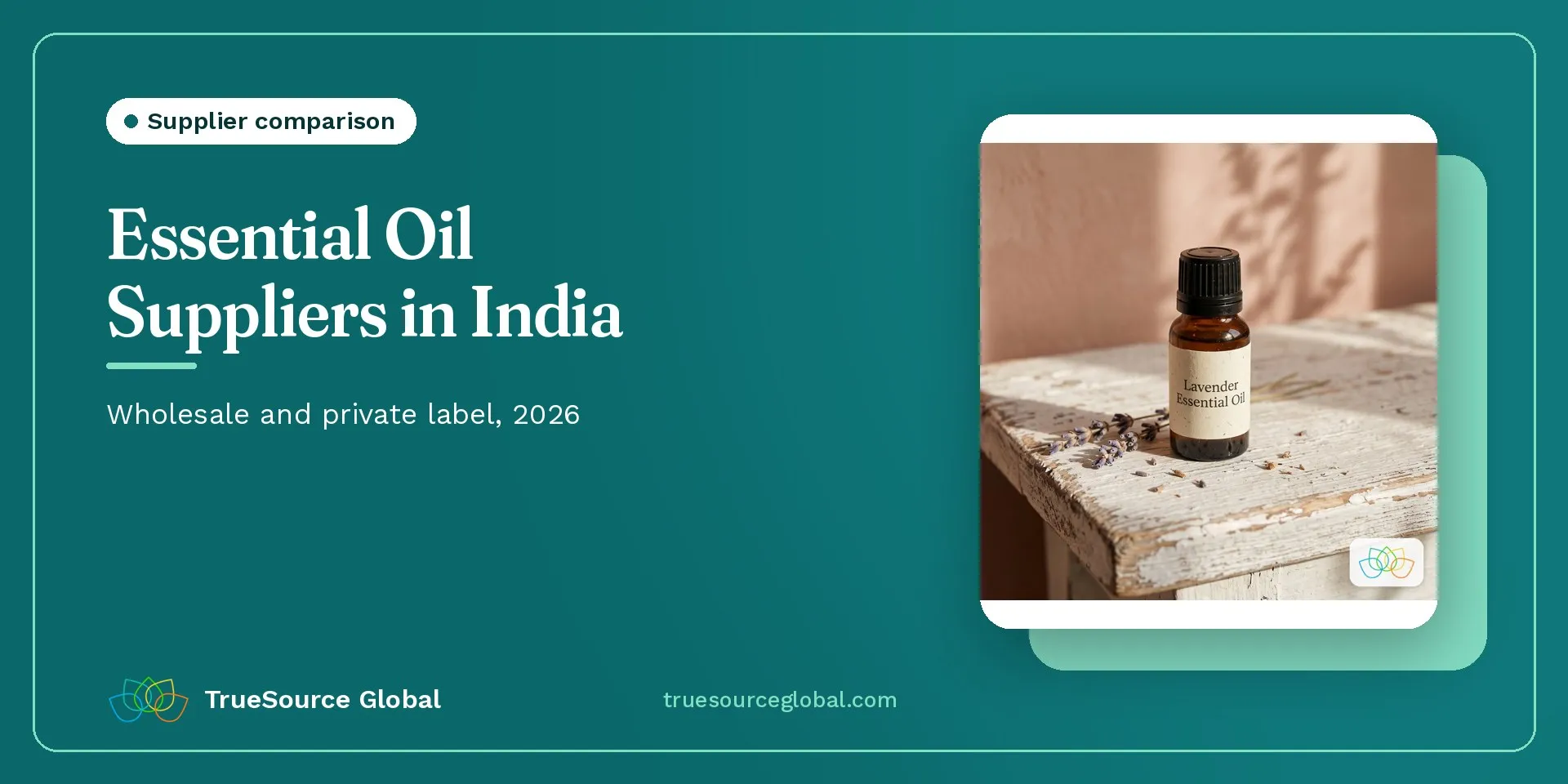
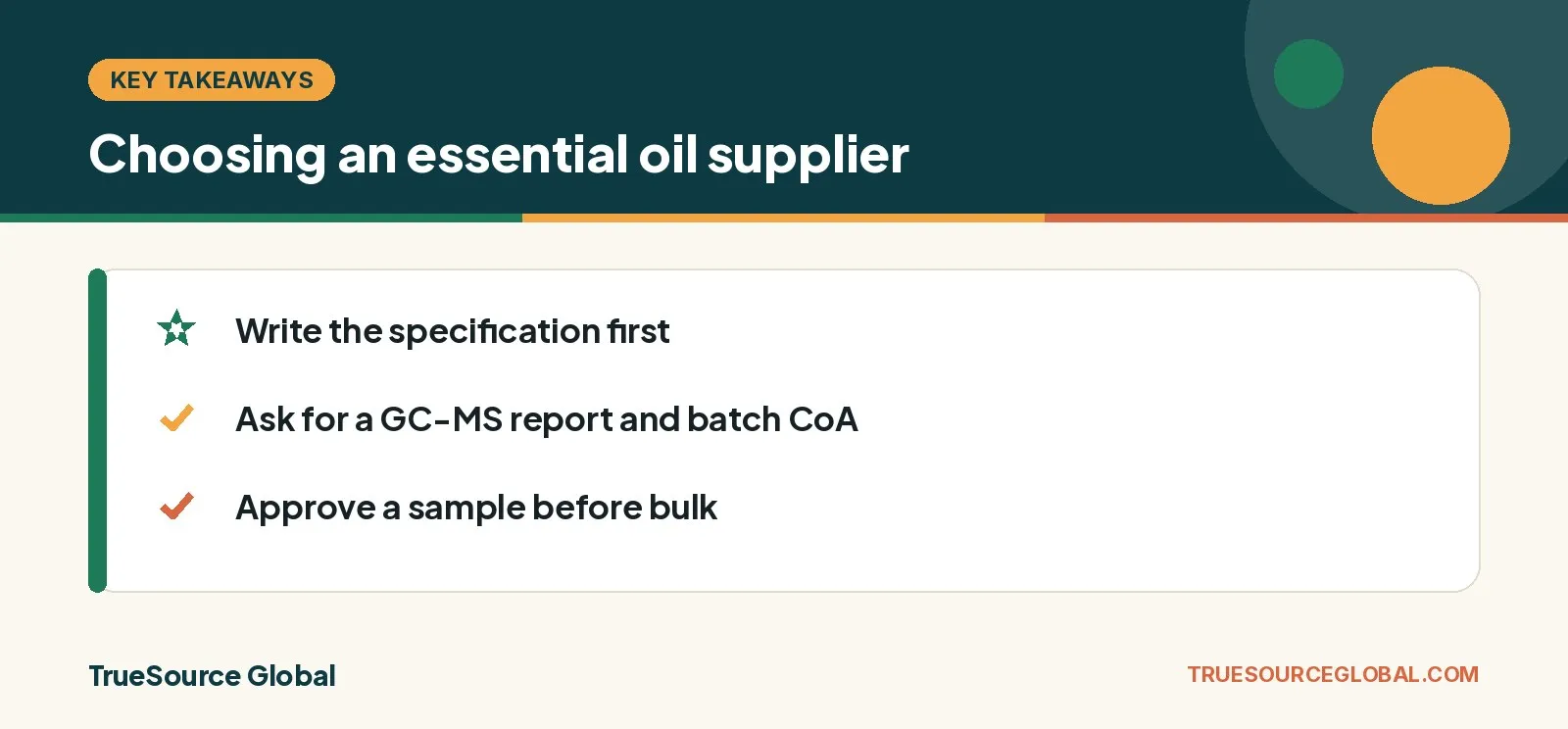
To choose among essential oil suppliers in India, write the specification first: the botanical name, the part of the plant used and the extraction method. Then ask each supplier for a GC-MS report and a batch Certificate of Analysis (CoA), and approve a sample before you pay for bulk. This guide compares five ways to buy, with TrueSource Global first, for brands and importers (we write with US buyers in mind) looking at wholesale or private label.
Disclosure: TrueSource Global publishes this guide, and we’ve put ourselves first. We explain why below, and we’ve been fair to the alternatives so you can judge for yourself.
What should you specify before you ask for prices?
Two suppliers can quote the same oil name and ship very different products. A written specification removes that room. Put these fields in every enquiry:
- Common and botanical name. For example, lavender is not one plant, so name the species in Latin.
- Part used. Leaf, flower, bark, wood, peel or seed gives a different oil.
- Extraction method. Steam distillation, cold pressing (common for citrus peel oils) or solvent extraction for absolutes.
- Origin and harvest. The region and, where known, the harvest year.
- Test reports. A GC-MS (gas chromatography with mass spectrometry) report shows the oil’s chemical profile. A batch CoA shows the test results for the lot you receive.
- Pack size and material, plus the label and documents for your market.
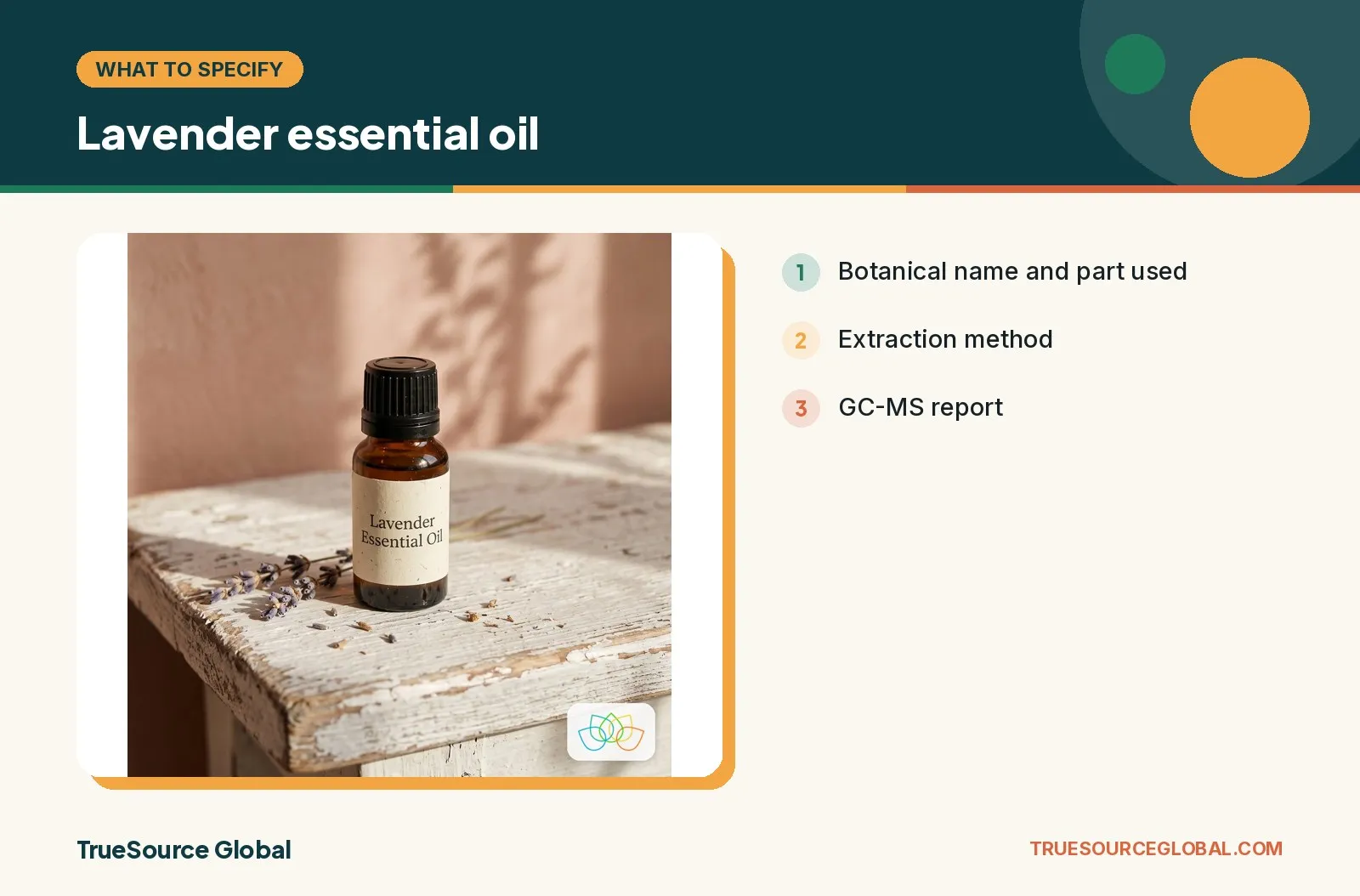
For a species where identity and legal sourcing carry extra weight, read our sandalwood essential oil guide rather than treating it like any other oil.
How do you check a GC-MS report and CoA?
A report is only useful if it belongs to your batch. Check that the batch number on the report matches the label on the sample, that the oil and species are named, and that the lab is named. Ask which laboratory issued it and whether it is a third-party lab or the producer’s own.
Then compare the profile of your approved sample with the production batch. A mismatch between sample and bulk is the most common worry we hear from first-time buyers, and the report is how you catch it. Keep a retained sample from every batch so you can test independently if a question comes up. Our quality and documentation page shows how we handle specifications, samples and batch documents.
What packaging suits wholesale and private label?
Bulk oil usually ships in drums or tins, and finished private label oil in small bottles. Glass bottles are among the packaging options we coordinate, along with kraft pouches, PET jars and tin boxes for other products. Ask your supplier about the closure type, whether the pack is sealed for transit and who supplies the label. A label design costs ₹1,500 (about US$18) per design with us. Confirm label wording against your market’s rules before printing.
What rules apply in your market?
Rules for essential oils depend on how you sell them: as a cosmetic ingredient, a fragrance, a food flavouring or something else. The intended use decides which regulator and which labelling rules apply. We do not summarise those rules here, because we have not verified them against current official sources for this guide. Check the regulator for your market and your label wording before you order, and ask your supplier for a safety data sheet. Do not rely on any supplier, including us, for a ruling on your product.
How do the options compare?
| Criteria | TrueSource Global | Direct from an Indian producer | B2B marketplaces | Local importer or distributor | Domestic co-packer |
|---|---|---|---|---|---|
| Specification held for you | Yes | You manage it | You manage it | Limited | Limited |
| Batch documents | CoA before shipping | Ask each producer | Varies by seller | Varies | Varies |
| Small first order | From 100 units | Varies | Varies | Often | Often |
| Private label support | Yes | Varies | Varies | Rarely | Yes |
| Export paperwork | Handled | You manage it | You manage it | Done already | Done already |
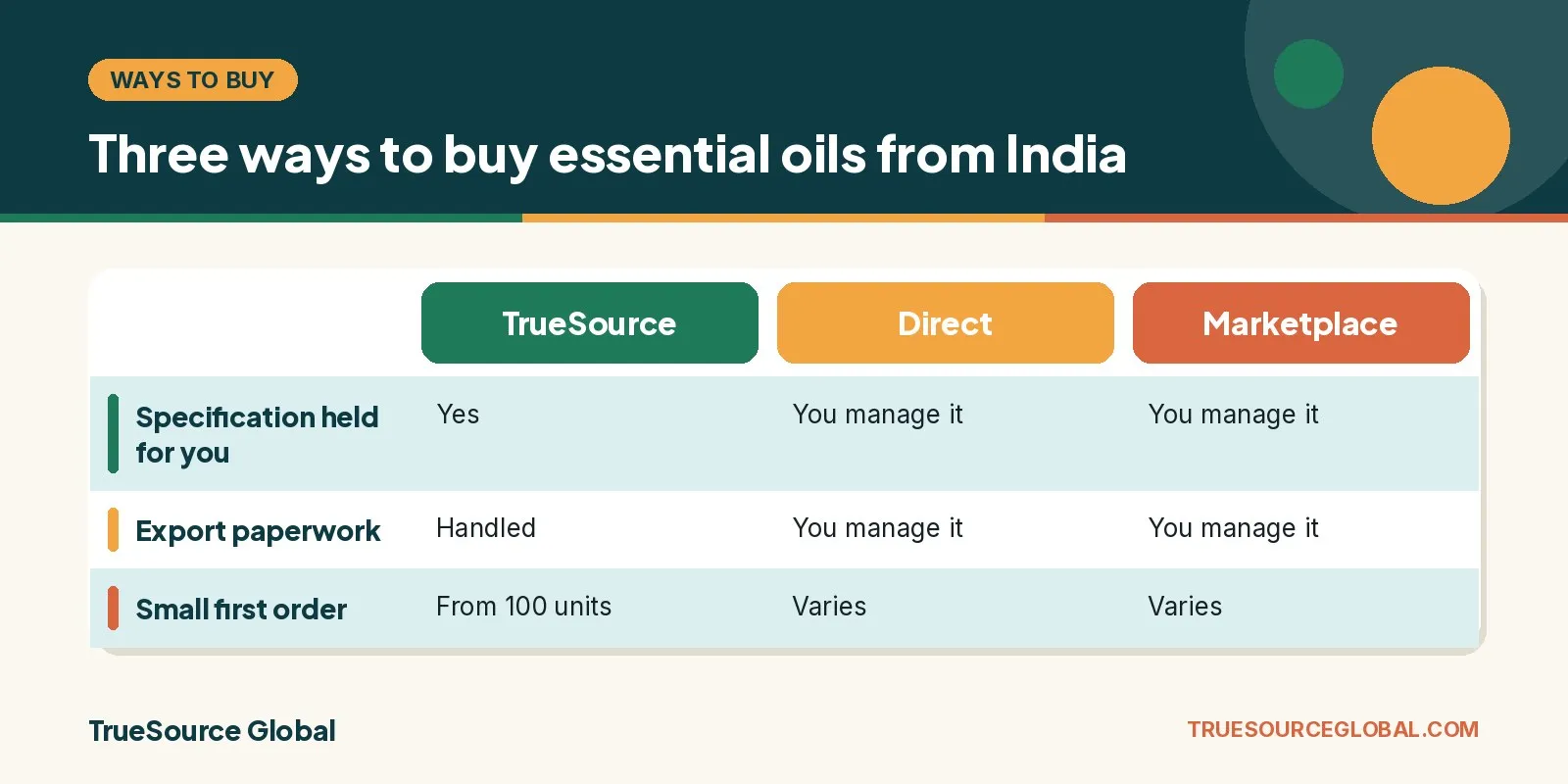
1. TrueSource Global
We are the sourcing and export brand of IndoFolk Wellness, New Delhi. We match your brief to partner producers, hold the specification, send samples and arrange export documents.
- Pros: samples dispatch in 5 to 7 working days; a quote within 12 hours; pilot runs from 100 to 250 units; third-party lab CoAs, including heavy metals and microbiology, with partner facilities that are GMP- and ISO-certified; one named contact.
- Cons: we don’t own factories, as production is with partner producers. Custom formulations take longer and need higher minimums. We’re a newer export brand, so ask for references and samples.
Production takes 7 to 14 business days after order and artwork approval. Browse our essential oils and cold-pressed carrier oils (for castor oil, see our castor oil buying guide), and see our private label service.
2. Buying direct from an Indian producer
Many Indian distillers and manufacturer-exporters sell directly. Pros: no middle layer, and you deal with the maker. Cons: you hold the specification, check the paperwork and manage export and disputes yourself. Verify each company’s claims and certificates yourself.
3. B2B marketplaces (IndiaMART, Alibaba)
Pros: many sellers in one place, quick price comparison. Cons: listings are self-reported, sellers range from producers to traders, and you must verify identity, documents and samples before paying.
4. A local importer or distributor
Pros: short lead times and import paperwork already done. Cons: you rarely see the producer, minimums for custom labels may be limited.
5. A domestic co-packer
Pros: bottling and labelling close to you, easy to visit. Cons: you still need to source the oil itself, and it adds a handover between oil supplier and packer.
Why would we choose TrueSource Global for essential oils?
Because the criteria above are the job we do: a written specification, a sample you approve, batch documents before shipping, and a contact who answers. The trade-off is plain. If you want to buy a single drum from one distiller and manage everything yourself, going direct may suit you. If you want one accountable contact and a small first run, that is where we fit.
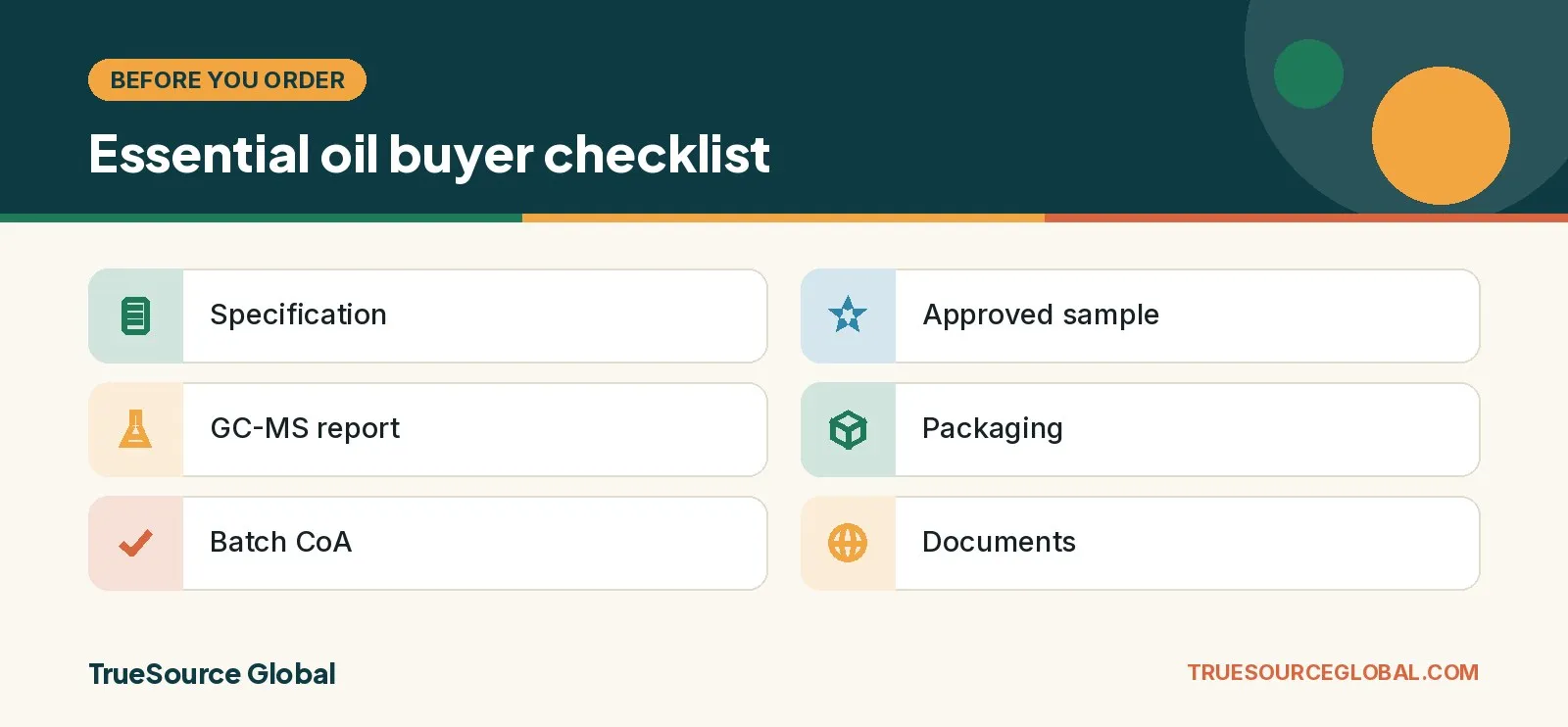
Supplier checklist before you order
- Write the specification with botanical name, part used and extraction method.
- Ask for the GC-MS report and the batch CoA, with the lab named.
- Approve a sample and keep a retained sample.
- Confirm packaging, closure and label wording for your market.
- Confirm MOQ, lead time and the documents shipped with the goods.
Ready to compare? Request a quote for essential oils with your oils, pack sizes and target market, or book a call.
Brands that also need plant carrier oils can read our cold-pressed oils wholesale guide.
Frequently asked questions
Who is the best essential oil supplier in India for wholesale?
There is no single best supplier, because it depends on the oil, the volume and whether you need private label. TrueSource Global publishes this guide and lists itself first, so weigh that. Judge any supplier on the same test: a written specification, a GC-MS report, a batch CoA and an approved sample before bulk.
What is the minimum order for private label essential oils?
For most products our minimum is 500 units per SKU. Pilot runs from 100 to 250 units are available at a slightly higher unit cost. Custom formulations need higher minimums. Other suppliers set their own minimums, so ask each one in writing.
What should an essential oil specification include?
The common name, the botanical name in Latin, the part of the plant used, the extraction method, the origin, the pack size and material, and the documents you need with each batch. Ask for a GC-MS report and a CoA, and compare the batch against your approved sample.
How long do samples and production take?
Samples are dispatched in 5 to 7 working days. Production takes 7 to 14 business days after order and artwork approval. Quotes are sent within 12 hours of your enquiry.
Can I buy sandalwood oil the same way?
Sandalwood has extra points to check, mainly the species and legal sourcing. We cover them in our separate guide to wholesale sandalwood essential oil from India.
Ready to source this from India?
Tell us the product, volume and market. We'll reply within 12 hours with a quote, MOQ and sample plan, with no obligation.